

When a Child Is Grieving: What Parents Need to Know
Child grief counseling is professional support that helps children process the death of a loved one in a safe, age-appropriate way. If your child is struggling after a loss, here is what to know at a glance:
- What it is: Therapy tailored to how children, not adults, experience and express grief
- Who it helps: Children of all ages, from toddlers to teens
- How it works: Through play, art, talk, and other creative methods that meet kids where they are
- When to seek it: When you notice behavioral changes, withdrawal, sleep problems, or academic decline after a loss
- Where to start: Talk to your child’s pediatrician, or contact a licensed counselor who specializes in childhood bereavement
Losing someone important can quietly shake a child’s entire world. They may not have the words to explain what they feel, and they often do not show grief the way adults do. Instead, you might notice a once-happy child becoming withdrawn, angry, or unusually clingy. You might see sleep problems, stomachaches, or a sudden drop in grades.
These are not behavioral problems. They are grief.
Around 1 in 20 children in the United States will lose a parent by age 16. And pediatricians report seeing at least one grieving child every single week. Yet many families are unsure whether what their child is going through is “serious enough” to seek help, or even where to begin.
That uncertainty is exactly why this guide exists.
At Stegall Counseling PLLC, supporting children through emotional pain, including child grief counseling, is central to the care the practice provides. In the sections ahead, we’ll walk through how children grieve, what professional support can look like, and how you can help your child heal.
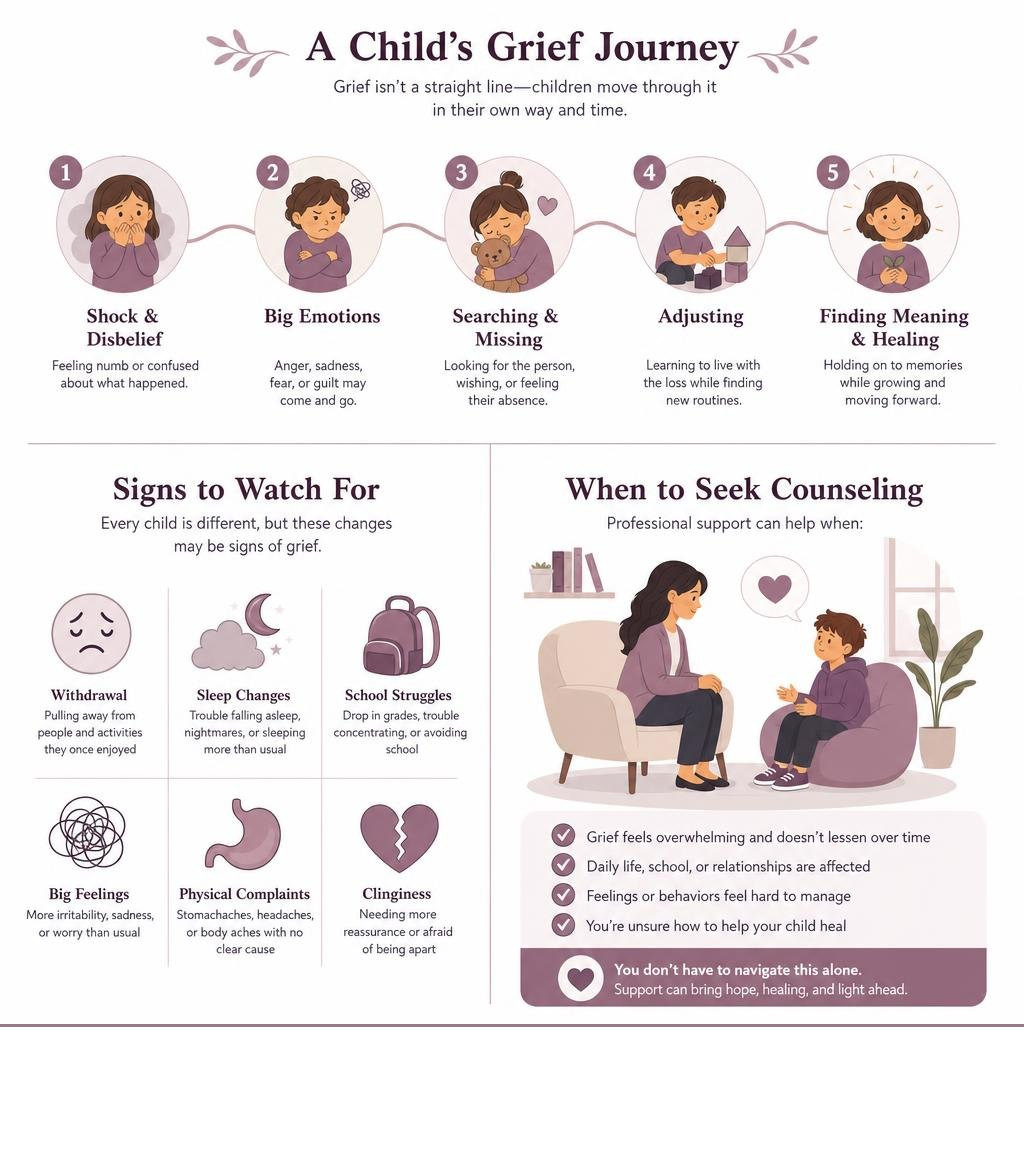
Understanding How Children Process Loss
When adults grieve, we generally understand what death means. We know it is permanent, we understand why it happened, and we have a lifetime of language to help us talk about our heavy hearts.
Children do not have those same tools. A child’s understanding of death is entirely dependent on their developmental stage. If we expect them to process loss like mini-adults, we miss the quiet, confusing ways they are actually struggling.
According to the American Academy of Pediatrics’ pediatric clinical report on supporting grieving families, children must grasp four core concepts to fully understand death, which usually happens between ages 5 and 7:
- Irreversibility: Death is permanent. The person cannot come back.
- Finality (Nonfunctionality): All bodily functions have stopped. The person cannot feel cold, hunger, or pain.
- Causality: What actually caused the death (to prevent the child from thinking their own bad thoughts or actions caused it).
- Universality: Death happens to all living things eventually, including themselves and the people they love.
Before reaching these milestones, a toddler or preschooler might see death as temporary or reversible, like a cartoon character who gets flattened and pops right back up. They might ask when Grandpa is coming back, even if they were just told he died. By elementary school, children begin to understand the permanence of death but may struggle with intense fears about their own safety or the safety of surviving caregivers. This developmental confusion often manifests as severe worry, which we discuss extensively in our guide on child anxiety: a parent’s guide to understanding and support.
For adolescents, the cognitive understanding of death is fully mature, but the emotional impact is complicated by their growing need for independence. Teens may hide their grief to protect their parents, or they may take on too much adult responsibility, masking their pain behind a wall of academic achievement or hyper-independence.
What is Child Grief Counseling and How Does It Help?
When a child experiences a profound loss, their emotional foundation is disrupted. Child grief counseling is a specialized form of therapy designed to help children navigate this landscape. It is fundamentally different from adult counseling because it does not rely solely on sitting on a couch and talking. (Let’s be honest: if you ask an eight-year-old to sit still for fifty minutes and “explore their existential sorrow,” you are going to get a lot of blank stares, swinging legs, and requests to use the restroom.)
Instead, child-centered grief therapy focuses on emotional safety and nonverbal expression. We meet children where they are developmentally, using creative mediums to help them externalize feelings they cannot yet put into words. This approach aligns with the model used by leading global organizations like the Services – National Centre for Childhood Grief, which emphasizes that children require highly specialized, interactive environments to process loss.
Through targeted therapeutic interventions, children learn that:
- All feelings, including anger, relief, guilt, and deep sadness, are normal and acceptable.
- The death was not their fault (addressing the “magical thinking” common in younger kids who believe their behavior caused the tragedy).
- They can maintain a continuous connection to the person who died through memories, rituals, and stories, while still participating fully in their own lives.
By providing a structured space to process these complex emotions, we help prevent unresolved grief from turning into long-term mental health challenges. You can read more about how early therapeutic intervention protects a child’s future well-being in our detailed breakdown of the benefits of child therapy.
Signs Your Child May Need Professional Support
It is entirely normal for children to show signs of distress immediately following a significant loss. However, when these symptoms persist for several weeks or begin to interfere with their daily life, it may be time to seek the help of a professional counselor.

Because children often lack the emotional vocabulary to say, “I am feeling overwhelmed by my grief today,” they speak to us through their behavior. Here are the most common warning signs that a child may need professional child grief counseling:
- Behavioral Regression: A return to younger behaviors, such as bedwetting, thumb-sucking, extreme separation anxiety, or demanding help with tasks they had already mastered.
- Uncharacteristic Emotional Swings: A gentle child suddenly lashing out in physical aggression, or a talkative child becoming completely silent and withdrawn.
- Sleep and Appetite Disruptions: Persistent nightmares, fear of sleeping alone, insomnia, or sudden changes in eating habits.
- Physical Complaints: Frequent stomachaches, headaches, or general body aches that have no clear medical cause (grief is highly physical for children).
- Academic and Social Decline: A sudden drop in grades, difficulty concentrating in class, or withdrawing from friends and activities they used to love.
- Role Reversal or Hyper-Independence: Trying to act like the “parent” or caregiver, hiding their own tears to avoid upsetting you, or refusing any help or comfort.
If you observe these patterns, it is not a sign of bad behavior; it is a signal that the emotional weight they are carrying has become too heavy to manage alone.
Therapeutic Modalities and Approaches
At Stegall Counseling PLLC, we do not believe in a one-size-fits-all approach. We utilize a variety of evidence-based, child-centered therapeutic modalities to help kids build emotional literacy and develop healthy coping strategies.
To help you understand the options available for your family, here is a quick comparison of the creative and cognitive therapies commonly used in childhood bereavement:
| Therapeutic Modality | Best Suited For | Primary Tools Used | Key Therapeutic Benefit |
|---|---|---|---|
| Play Therapy | Toddlers & Elementary (Ages 3-10) | Puppets, dolls, role-play, games | Symbolic expression of complex emotions without requiring direct verbalization. |
| Creative Arts Therapy | All Ages (Children & Teens) | Painting, clay, music, memory books | Externalizes grief, processes sensory memories, and honors the deceased. |
| Sand Tray Therapy | All Ages | Miniature figures, sand tray scenes | Recreates internal worlds and family dynamics to safely explore painful realities. |
| Cognitive Behavioral Therapy (CBT) | Older Children & Teens (Ages 8+) | Cognitive restructuring, coping skills | Identifies negative thought patterns and manages physical symptoms of anxiety. |
Play Therapy in Child Grief Counseling
For young children, toys are their words, and play is their language. Through structured play therapy, children can project their internal conflicts onto puppets, action figures, or stuffed animals. This creates a safe psychological distance. If a child is too overwhelmed to say, “I am scared that my mom is going to die too,” they might play out a scenario where a baby animal is separated from its mother but finds safety with a protector.
This symbolic play allows the therapist to gently intervene, build coping skills, and restore a sense of safety. To understand how this fits into broader pediatric wellness, explore our approach to developmental and behavioral therapy.
Creative Arts and Sand Tray Therapy
Grief is not just a cognitive experience; it is a sensory one. Creative arts therapy allows children to paint their anger, mold their sadness with clay, or write songs that express their longing.
Similarly, sand tray therapy involves giving a child a tray of sand and a vast collection of miniature figures. The child builds a world in the sand, representing their family, their feelings, or even their concept of where their loved one has gone. This nonverbal processing bypasses the logical brain and taps directly into emotional healing, allowing children to make meaning of their loss on their own terms.
Talk Therapy and Cognitive Behavioral Therapy (CBT)
For older children and adolescents who are ready to process their loss verbally, we use tailored talk-based therapies. Cognitive Behavioral Therapy (CBT) helps children identify unhelpful thoughts (such as “I should have been nicer to my brother before he died, and that’s why this happened”) and gently challenge them.
Through narrative therapy, we help the child tell the story of their loss in a way that honors their pain while also highlighting their resilience. If you are curious about how these verbal strategies work in practice, read our guide on what is talk therapy.
How Parents Can Support a Grieving Child at Home
While professional therapy provides invaluable tools, the daily environment you create at home is the most critical factor in your child’s healing. You do not have to be a perfect parent; you simply need to be a safe, consistent presence.

Creating a Safe Space for Child Grief Counseling Concepts at Home
Here are several practical ways you can reinforce therapeutic concepts and support your child at home:
- Use Honest, Clear Language: Avoid confusing euphemisms like “went to sleep,” “passed away,” or “lost.” To a young child, “losing” someone sounds like they dropped their keys and will find them later; “going to sleep” can make them terrified to go to bed. Use the words died and death with gentle clarity.
- Model Healthy Emotional Expression: It is okay to cry in front of your children. If you pretend everything is fine, they will feel they must hide their sadness too. Let them see you grieve, and explain: “I am crying because I miss Daddy, but I am going to be okay.”
- Maintain Consistent Routines: Grief brings chaos, but routines bring safety. Keep bedtimes, mealtimes, and school schedules as consistent as possible. This predictability reassures the child that even though their world has changed, their immediate environment is still secure.
- Create Memory Rituals: Give your child concrete ways to remember their loved one. You can plant a flower, build a memory box, look at photo albums, or cook the deceased person’s favorite meal together.
Partnering with Pediatricians and Schools
Supporting a grieving child requires a team. Pediatricians are often the first line of defense; they can screen for physical manifestations of grief and provide referrals to trusted local therapists.
It is also vital to communicate openly with your child’s teachers and school counselors. Let them know what has happened so they can monitor changes in academic performance, social interactions, or behavioral patterns.
For families seeking child grief counseling, Stegall Counseling PLLC offers compassionate support focused on helping children process loss in age-appropriate ways. The practice provides a safe, steady space where children can express emotions, build coping skills, and feel supported as they move through grief.
Frequently Asked Questions About Child Grief
How does child grief differ from adult grief?
Adults tend to experience grief as a continuous, heavy blanket. Children, however, grieve in “puddles.” They may cry for ten minutes, and then immediately ask if they can go outside to play tag or watch a cartoon. This is a healthy, natural defense mechanism that prevents their nervous system from becoming overloaded. Additionally, child grief often manifests physically (stomachaches, headaches) and behaviorally rather than through verbal expressions of sadness.
What should I avoid saying to a grieving child?
Avoid phrases that minimize their pain, force emotional strength, or introduce confusing concepts. Do not say:
- “You need to be strong for your mother.” (This places an adult emotional burden on a child.)
- “At least they aren’t suffering anymore.” (While true, children struggle to process “at least” statements when they are in pain.)
- “I know exactly how you feel.” (Every child’s relationship and grief journey is unique; instead, say, “I am here to listen to how you feel.”)
How long does the childhood grieving process last?
Grief is not a process that children “get over.” It is a lifelong journey of integration. Because children grow developmentally, they will re-grieve the loss at different milestones. A child who lost their father at age five will grieve him differently at age ten, and again when they graduate high school or have their own children. Professional counseling is not about “fixing” the sadness so it disappears; it is about helping children learn to carry their loss with resilience and hope.
Conclusion
When a child’s world is shattered by loss, finding the right path forward can feel overwhelming. But healing is possible. With the right support, children can process their pain, rebuild their sense of safety, and learn to carry their memories forward with strength.
At Stegall Counseling PLLC, we provide compassionate, child-centered therapy that honors your child’s unique emotional journey. Our warm, relatable, and humor-infused approach helps children and families navigate the darkest chapters of life with a sense of security and hope.
If you are ready to support your child’s healing, we are here for you. We invite you to explore our specialized grief and loss counseling services, learn more about our mental health specialties, or contact us today to schedule a session at our Indian Trail, NC office. Let’s take this next step together.