

Beginner’s Guide to Trauma Therapy Options
What Is Trauma Therapy and Could It Help You?
Trauma therapy is a specialized form of psychotherapy that helps people heal from the mental, emotional, and physical effects of traumatic experiences.
Here’s a quick overview of what you need to know:
- What it is: A focused approach to therapy that addresses how trauma affects your thoughts, feelings, body, and relationships
- Who it’s for: Anyone who has experienced a distressing event whether recent or years ago and is still feeling its effects
- Common approaches: Cognitive Processing Therapy (CPT), Prolonged Exposure (PE), EMDR, Somatic Therapy, and more
- How long it takes: Most evidence-based trauma therapies last roughly 3 months, though this varies by person and approach
- Does it work? Yes, research consistently shows that trauma-focused therapy reduces symptoms and builds lasting coping skills
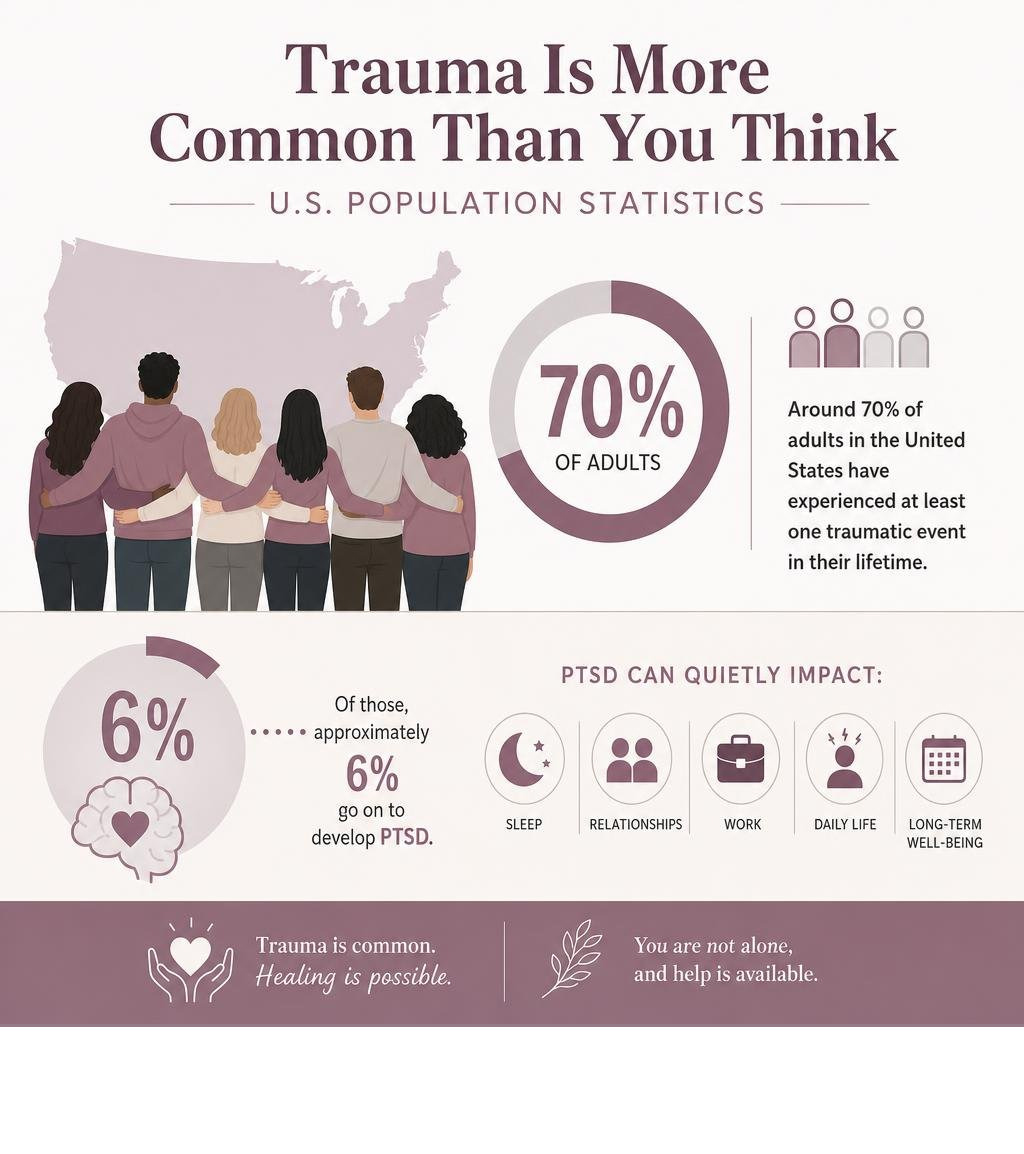
Trauma is far more common than most people realize. Around 70% of adults in the United States have experienced at least one traumatic event in their lifetime. Of those, approximately 6% go on to develop PTSD — a condition that can quietly disrupt sleep, relationships, work, and daily life, sometimes for years.
You might not even connect what you’re feeling right now to something that happened in the past. Many people describe it as: “My life looks fine on paper, but I feel awful.” That gap between what your life looks like and how you actually feel inside? That’s often where unprocessed trauma lives.
The good news is that healing is possible, and it starts with understanding your options.
At Stegall Counseling PLLC, our practice helps adults, young people, and couples work through the lasting impact of trauma. In this guide, we’ll walk you through what to know about trauma therapy, from how it’s defined to which approaches have strong evidence behind them, so you can take the next step with confidence.
Understanding Trauma: Definitions, Types, and Manifestations
Trauma is not just a single memory of a bad day; it is a profound physiological and psychological response to an event that overwhelmed your ability to cope. When we go through something terrifying, our nervous system undergoes a massive shift. Instead of processing the event and filing it away like a normal memory, our brain can get stuck in a state of persistent fight-or-flight.
This nervous system dysregulation manifests in several ways:
- Cognitive functioning: Difficulty concentrating, memory gaps, intrusive thoughts, and a constant expectation of danger (hypervigilance).
- Emotional effects: Sudden anger, irritability, persistent guilt, shame, and a sense of emotional numbness or detachment from loved ones.
- Physical symptoms: Chronic muscle tension, fatigue, unexplained aches, sleep disturbances, and a racing heart.
- Interpersonal functioning: Difficulty trusting others, withdrawing from social circles, and feeling isolated.
Clinical Definitions: DSM-5-TR vs. SAMHSA
In clinical settings, trauma is defined in a few different ways. The Diagnostic and Statistical Manual of Mental Disorders, Fifth Edition, Text Revision (DSM-5-TR) takes a more structured approach, particularly when diagnosing post-traumatic stress disorder (PTSD). Under the DSM-5-TR, trauma requires direct exposure, witnessing, or learning about actual or threatened death, serious injury, or sexual violence.
Conversely, the Substance Abuse and Mental Health Services Administration (SAMHSA) utilizes a much broader definition based on the “Three Es”: Event, Experience, and Effect. SAMHSA recognizes that an event doesn’t have to be physically life-threatening to cause trauma; if an individual experiences it as physically or emotionally harmful or life-threatening, and it has lasting adverse effects on their functioning, it is considered trauma. This inclusive framework helps us understand that things like emotional abuse, neglect, and systemic discrimination are deeply traumatic. For a deeper academic look at how these definitions shape clinical interventions, see the foundational text Principles of Trauma Therapy.
Acute, Chronic, and Complex Trauma
Not all trauma is the same, and understanding the differences helps us tailor your healing journey:
- Acute Trauma: This results from a single, isolated distressing event, such as a car accident, a natural disaster, or a sudden physical assault.
- Chronic Trauma: This occurs when a person is exposed to multiple, repeated, and prolonged traumatic events over time, such as ongoing domestic abuse, bullying, or a long-term medical illness.
- Complex Trauma: This typically involves multiple interpersonal traumatic experiences, often beginning in childhood (such as severe abuse or neglect) perpetrated by primary caregivers. This deeply impacts attachment, self-worth, and emotional regulation. It also encompasses betrayal trauma, which occurs when a trusted person or institution violates your safety. If you are navigating this specific pain, you can read our guide on recovering from betrayal trauma.
What is Trauma-Informed Trauma Therapy?

Many people assume that going to therapy for trauma means you have to sit in a chair and recount every terrible detail of your past until you cry. But modern trauma therapy has evolved. Today, the gold standard is trauma-informed care.
A trauma-informed approach represents a profound shift in perspective. Instead of asking, “What is wrong with you?” we ask, “What happened to you?” This simple change removes blame and pathologization, recognizing that your symptoms (like panic, anger, or dissociation) are actually adaptive survival strategies that your brilliant mind and body developed to keep you alive. To explore this framework further, you can read the Trauma-Informed Therapy overview provided by StatPearls.
The Core Principles of Trauma-Informed Care
At both the systems and clinician levels, trauma-informed care is guided by SAMHSA’s “4 R’s”:
- Realize the widespread impact of trauma and understand potential paths for recovery.
- Recognize the signs and symptoms of trauma in clients, families, and staff.
- Respond by fully integrating knowledge about trauma into policies, procedures, and practices.
- Resist re-traumatization by actively avoiding practices that might trigger past panic.
To put these into action, clinicians adhere to six fundamental principles:
- Safety: Ensuring that the physical and interpersonal environment feels safe and secure.
- Trustworthiness and Transparency: Building clear, honest, and consistent boundaries.
- Peer Support: Utilizing shared lived experiences to foster healing.
- Collaboration and Mutuality: Sharing power; recognizing that the client is the expert on their own life.
- Empowerment, Voice, and Choice: Validating individual strengths and offering choices in the treatment path.
- Cultural, Historical, and Gender Factors: Moving past cultural stereotypes and offering responsive care.
How It Differs from Traditional Psychotherapy
Traditional talk therapy is wonderful for many life adjustments, but it often relies heavily on top-down processing. Which is using the cognitive, thinking brain to solve problems. However, trauma is stored deeply in the subcortical brain and the nervous system. When you are triggered, your logical brain goes offline.
Trauma-informed trauma therapy integrates bottom-up approaches, meaning we work with the body and nervous system first to establish safety before trying to restructure your thoughts. This prevents re-traumatization, ensuring we never push you faster than your nervous system can tolerate. If you want to compare these approaches, you can learn more about what is talk therapy? and how it fits into the broader therapeutic landscape.
Evidence-Based Trauma Therapy Modalities
When seeking professional support, it helps to know which modalities have been extensively researched and proven to reduce symptoms.
Cognitive Processing Therapy (CPT) as a Trauma Therapy
Cognitive Processing Therapy (CPT) is a specific type of cognitive behavioral therapy that helps you evaluate and change the unhelpful beliefs that have kept you “stuck” since your trauma.
- How it works: When trauma occurs, it often alters our beliefs about safety, trust, power, control, esteem, and intimacy. CPT helps you write an “impact statement” to explore these changes, and uses Socratic questioning to gently challenge automatic thoughts (like “It was my fault” or “The world is 100% dangerous”).
- Duration: CPT is a highly structured, manualized treatment that typically lasts about 12 sessions. It can be delivered with or without a written trauma account, making it highly adaptable. For more clinical details, refer to the APA’s Cognitive Processing Therapy details.
Prolonged Exposure (PE) and EMDR
Two of the most heavily researched and strongly recommended therapies for PTSD are Prolonged Exposure (PE) and Eye Movement Desensitization and Reprocessing (EMDR).
- Prolonged Exposure (PE): This therapy teaches you to gradually approach trauma-related memories and situations that you have been avoiding. It consists of imaginal exposure (retelling the trauma story in a safe space to process the emotions) and in vivo exposure (gradually facing safe, real-world situations you’ve avoided). PE typically involves 8 to 15 weekly sessions of 90 minutes each.
- EMDR (Eye Movement Desensitization and Reprocessing): EMDR helps the brain reprocess traumatic memories while you remain fully awake and in control. By using bilateral stimulation — such as guided side-to-side eye movements, light taps, or tones — EMDR allows the brain to file the memory away correctly, making the emotional charge feel much smaller and farther away. EMDR typically consists of 6 to 12 sessions of 60 to 90 minutes.
To see how these therapies compare in clinical guidelines, you can review the UpToDate PTSD psychotherapy guidelines.
Somatic and Present-Centered Trauma Therapy
For those who do not wish to recount their trauma, or who find that their symptoms are heavily physical, other highly effective options exist:
- Somatic Experiencing and Sensorimotor Psychotherapy: These body-based approaches help you identify where trauma-related tension, panic, and numbness are stored in your physical body, using gentle movement and breathwork to safely release the stored stress.
- Present-Centered Therapy (PCT): PCT is a non-trauma-focused therapy that helps you manage current life problems related to your history without requiring you to discuss the traumatic event itself. It focuses on building problem-solving skills, restoring confidence, and practical daily functioning. To understand how this works, read the official guide on Present-Centered Therapy for PTSD.
- Emotion Regulation Techniques: Learning how to soothe your nervous system in real-time is a core component of any trauma program. Check out our practical emotional regulation tips to start building these skills today.
Addressing Co-Occurring Conditions and Individualizing Care

Trauma rarely travels alone. It frequently co-occurs with other mental health struggles, including depression, anxiety, panic attacks, substance use disorders, borderline personality disorder, and even psychosis.
When you have experienced trauma, your emotions can feel incredibly overwhelming, leading you to wonder, “Are my reactions even normal?” (Spoiler alert: Yes, they are. You can read more about this in our article: are my emotions valid?).
Managing PTSD, Depression, and Anxiety
Untreated trauma can cause a failure of fear extinction, meaning your brain cannot distinguish between past danger and present safety. This can lead to frequent panic attacks, chronic depression, and complex grief. If you are struggling with a profound sense of loss alongside your trauma, specialized grief and loss counseling can help you honor your grief while safely processing the traumatic elements of your loss.
Tailoring Treatment Plans to Individual Needs
Because everyone’s nervous system is unique, trauma treatment must be highly individualized. A skilled clinician will adjust your treatment plan based on:
- Trauma Chronicity: Single-incident trauma may resolve in fewer sessions, whereas childhood or complex trauma requires a longer, paced approach to build trust and stability first.
- Pacing and the “Therapeutic Window”: We must stay within your “window of tolerance” — the zone where you can process emotions without becoming completely overwhelmed (flooded) or emotionally shut down (dissociated).
- Cultural Adaptations: Modifying evidence-based treatments to respect your cultural background, historical context, and personal values. This is all part of the process of unburdening your soul and reclaiming your peace.
The Role of the Healthcare Team and Creating a Safe Environment
To help you visualize how different treatment styles target trauma, here is a quick comparison:
| Therapy Modality | Focus Area | Trauma Discussion Required? | Typical Duration |
|---|---|---|---|
| Cognitive Processing Therapy (CPT) | Challenging and restructuring unhelpful beliefs | Yes (focused on thoughts/beliefs) | ~12 sessions |
| Prolonged Exposure (PE) | Facing avoided memories and real-world triggers | Yes (recounting the event) | 8–15 sessions |
| EMDR | Reprocessing memories via bilateral stimulation | Minimal verbal recounting | 6–12 sessions |
| Somatic Experiencing | Releasing physical tension and body-held stress | No | Varies |
| Present-Centered Therapy (PCT) | Solving current life problems and building coping skills | No | ~12 sessions |
To learn more about how these specialized services are structured to maximize safety, you can explore the NCBI Bookshelf chapter on Trauma-Specific Services.
Interprofessional Collaboration in Healing
Healing from trauma often requires a team. While your primary therapist helps you process memories, you may also benefit from the support of psychiatric providers, social workers, and primary care doctors working in harmony. If you are currently supporting someone else through their mental health struggles, your well-being matters too; read our guide on supporting others with their mental health to protect your own boundaries.
Fostering a Culturally Sensitive Space
A safe therapeutic environment must recognize historical, systemic, and cultural traumas. True healing requires a space where you can let down your guard and explore what it means to be vulnerable without fear of judgment. If vulnerability feels terrifying right now, we invite you to read our thoughts on how to be vulnerable in a safe, paced, and empowered way.
Frequently Asked Questions about Trauma Therapy
How long does trauma therapy typically take to show results?
While many highly structured, evidence-based trauma treatments (like CPT, PE, or EMDR) are designed to show significant symptom reduction in about 3 months (roughly 12 sessions), there is no universal timeline. Some individuals notice relief from panic and physical tension within a few weeks, while those working through complex, lifelong childhood trauma may choose to stay in therapy longer to reinforce their coping skills and build relational trust.
Can trauma therapy help if the event happened many years ago?
Absolutely. Trauma does not have an expiration date. Because traumatic memories are stored as somatic tension and emotional patterns in the nervous system, they can remain highly active for decades. Whether your trauma occurred last month or thirty years ago, specialized trauma therapy can help your brain and body finally learn that the danger has passed and it is safe to relax.
What is the difference between talk therapy and somatic trauma therapy?
Traditional talk therapy primarily focuses on top-down processing, helping you analyze and restructure thoughts using your logical mind. Somatic trauma therapy uses bottom-up processing, focusing on physical sensations, breathwork, and body awareness to help release the physical energy of trauma trapped in the nervous system. Integrating both approaches often yields the most complete healing.
Conclusion
Healing from trauma is not about forgetting what happened or pretending that everything is fine. It is about helping your nervous system understand that the danger is over, so you can stop simply surviving and start truly living.
At Stegall Counseling PLLC, we believe that trauma work doesn’t have to feel sterile, cold, or endlessly heavy. Our practice brings a warm, deeply relatable, and humor-infused approach to clinical therapy. We understand that finding the right support can feel overwhelming, which is why we offer convenient, in-network insurance options to make your path to healing as smooth as possible.
If you are ready to take the next step, explore our mental health specialties or contact us to schedule a consultation. You don’t have to carry this weight alone anymore. We are here to walk alongside you.