

Complicated Grief Treatment: How Therapy Helps You Move Forward
How Complicated Grief Treatment Helps You Move Forward
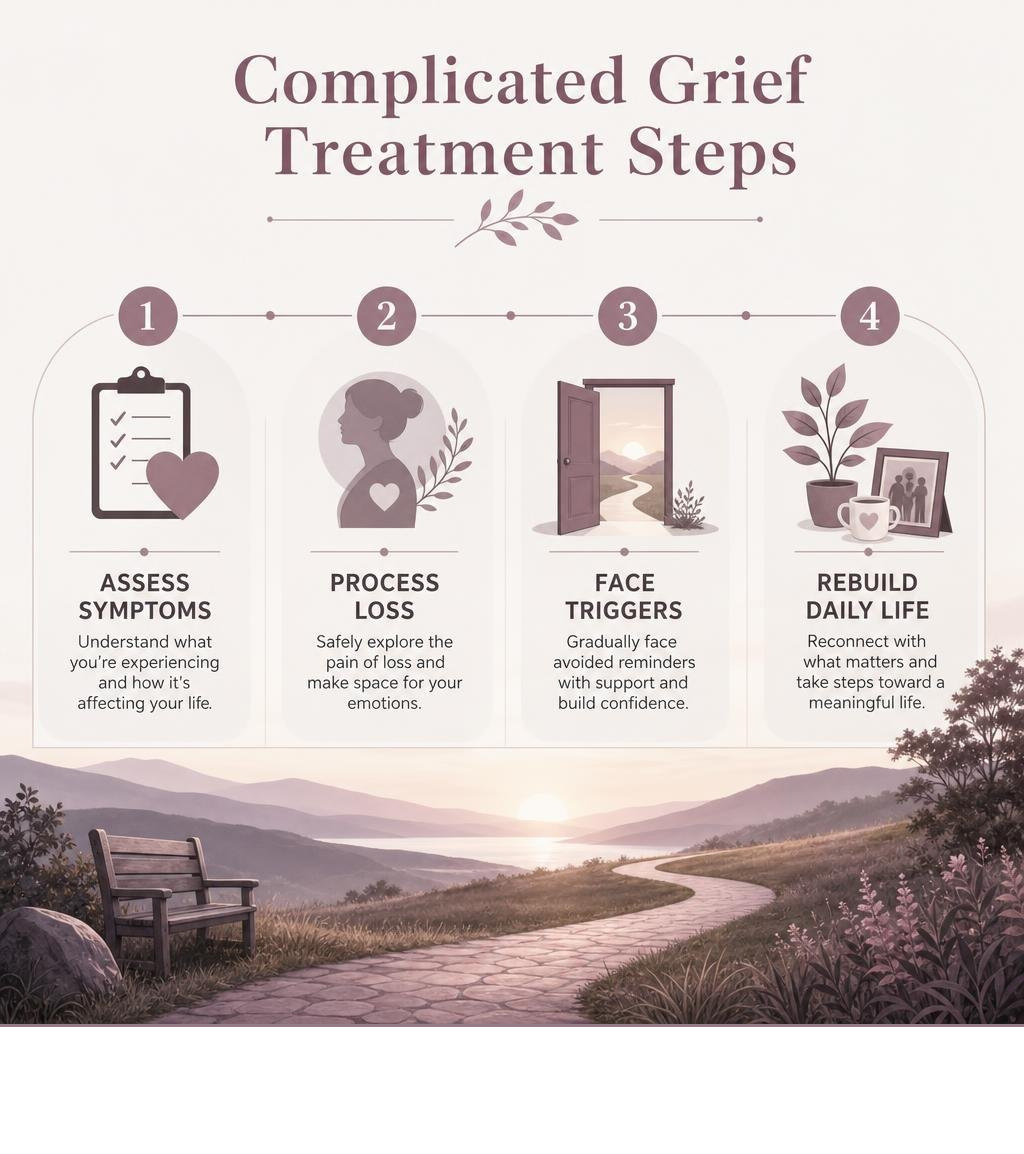
Complicated grief treatment helps when grief stays intense, consuming, and disruptive long after a loss. The most supported approach is grief-focused psychotherapy that helps you face avoided reminders safely, work through painful thoughts and emotions, reconnect with supportive people, and take small steps toward a meaningful life alongside the loss.
This is not about “getting over” someone you love. It is about easing the feeling of being stuck in acute grief so the relationship and memories can become part of your life without controlling every day.
Complicated grief, also called prolonged grief disorder, affects an estimated 7% to 10% of bereaved people. It can involve constant yearning, disbelief, guilt, anger, emotional numbness, or avoiding places and memories connected to the death. Help is especially important when grief is making it hard to work, care for family, sleep, maintain relationships, or feel safe.
At Stegall Counseling, PLLC, we support adults across life stages as they work through anxiety, depression, trauma, and major life changes that can shape the grieving process. We approach complicated grief treatment with compassion, practical tools, and space for each partner’s unique experience of loss.
Handy complicated grief treatment terms:
Understanding Complicated Grief: Signs, Risk Factors, and Clinical Diagnosis
Losing someone central to your world changes everything. In the early days and weeks, acute mourning brings a whirlwind of overwhelming feelings, tearfulness, sleep disruption, and disbelief. For most people, this acute phase gradually softens into integrated grief over time. The pain does not vanish, but it steps into the background, allowing life, purpose, and even laughter to return.
However, for roughly 2% to 3% of the global population and 7% to 10% of bereaved individuals, that natural progression stalls. When someone experiences complicated grief, also formally recognized as Prolonged Grief Disorder, acute grief remains frozen in place. The mind gets caught in intense longing, persistent yearning, emotional numbness, and deep disbelief that refuses to ease months or years later.
Understanding what is happening biologically and emotionally is the first step toward relief. Grief is not a linear set of stages that you complete like a checklist. When complications arise, maladaptive avoidance takes root. A grieving individual might avoid every place, picture, or song that reminds them of the deceased. Alternatively, they might engage in compulsive proximity seeking, such as leaving a room entirely untouched for years or spending hours every single day at a gravesite because the thought of stepping into a future without their loved one feels like a betrayal.
Several circumstances elevate the risk of developing prolonged grief:
- Sudden, unexpected, or traumatic losses such as accidents, homicides, or suicides
- The loss of a child or young adult
- Prior histories of trauma, anxiety, or major depression
- Being a long-term primary caregiver with high caregiver burnout
- Insecure attachment styles or high dependency on the deceased partner
- A lack of strong emotional and social support systems following the loss
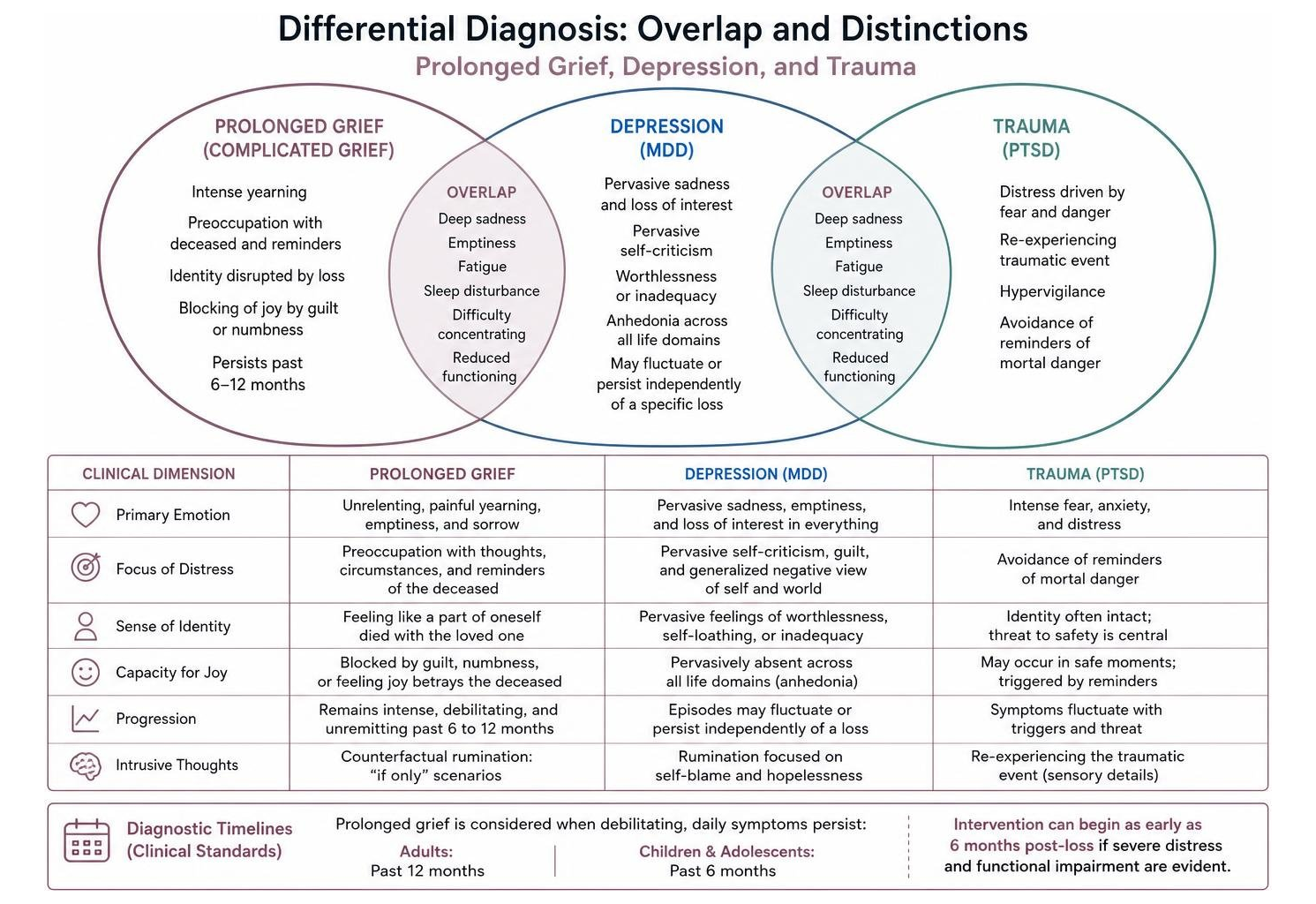
To help clarify how prolonged grief presents clinically, here is a comparison based on clinical standards, including Mayo Clinic diagnostic guidelines for complicated grief:
| Feature | Normal Bereavement | Complicated Grief (Prolonged Grief) | Clinical Depression (MDD) |
|---|---|---|---|
| Primary Emotion | Waves of sadness mixed with positive memories | Unrelenting, painful yearning, emptiness, and sorrow | Pervasive sadness, emptiness, and loss of interest in everything |
| Focus of Distress | Centered on the loss and missing the loved one | Preoccupation with thoughts, circumstances, and reminders of the deceased | Pervasive self-criticism, guilt, and generalized negative view of self and world |
| Sense of Identity | Intact, though adapting to new roles over time | Feeling like a part of oneself died along with the loved one | Pervasive feelings of worthlessness, self-loathing, or inadequacy |
| Capacity for Joy | Momentary positive emotions and laughter can still occur | Blocked by guilt, numbness, or feeling that joy betrays the deceased | Pervasively absent across all life domains (anhedonia) |
| Progression | Waves lessen in intensity and frequency across months | Remains intense, debilitating, and unremitting past 6 to 12 months | Episodes may fluctuate or persist independently of a specific loss |
Differentiating Prolonged Grief from Major Depression and PTSD
Making an accurate differential diagnosis is essential because treating complicated grief requires tools distinct from standard depression interventions.
When working through depression, a person’s inner dialogue often centers on worthlessness, generalized hopelessness, and self-blame unrelated to a specific event. In prolonged grief, the emotional center of gravity is yearning and longing specifically for the deceased person.
Similarly, there is significant overlap between prolonged grief and trauma reactions, which is where specialized trauma therapy plays a vital role. In post-traumatic stress, distress is primarily driven by fear, hypervigilance, and avoiding reminders of mortal danger. In complicated grief, the distress is fueled by the painful reality of permanent separation and intense attachment distress.
Intrusion symptoms also look different:
- A trauma survivor relives the terrifying sensory details of the traumatic event.
- A person with complicated grief struggles with counterfactual thinking, endlessly replaying “if only” scenarios: “If only I had called five minutes sooner,” or “If only we had gone to a different hospital.”
These rumination loops keep the brain trapped in a state of emotional protest, blocking adaptation.
Clinical Assessment Tools and Diagnostic Timelines
In standard clinical practice, a formal diagnosis of prolonged grief is considered when debilitating, daily symptoms persist past the 12-month mark for adults, or past 6 months for children and adolescents. However, specialized interventions can begin as early as 6 months post-loss if severe distress and functional impairment are clearly evident.
Clinicians use validated measurement-based care tools to evaluate symptom severity, including:
- The Inventory of Complicated Grief (ICG): A 19-item questionnaire where a score of 30 or higher indicates clinically significant complicated grief.
- The Brief Grief Questionnaire (BGQ): A rapid 5-item screening assessment used to identify acute stuck points.
- Structured Clinical Interviews: Evaluating persistent daily yearning, emotional detachment, feeling that life has lost its meaning, and extreme difficulty reintegrating into daily routines.
Regularly using these tools helps track progress throughout therapy and ensures each partner receives care matched to their exact clinical needs.
Evidence-Based Modalities: How Complicated Grief Treatment Works

When standard talk therapy or general depression treatments fall short, targeted psychotherapy protocols make a substantial difference. The most rigorously studied framework is Complicated Grief Treatment (CGT), a manualized 16-session protocol developed by Dr. M. Katherine Shear and evaluated in multiple large-scale clinical trials.
Research demonstrates that CGT achieves a response rate of roughly 70% to over 80%, outperforming traditional interpersonal therapy and general supportive counseling. In a major clinical trial on grief psychotherapy outcomes, response rates for individuals receiving the structured grief therapy protocol reached 82.5%, compared to 54.8% for supportive clinical management alone. Crucially, treatment gains are well-preserved, with over 93% of responders maintaining their progress at six-month follow-up evaluations.
CGT works by unblocking the natural adaptation process through the Dual Process Model of Coping. Rather than forcing someone to choose between dwelling on sorrow or pretending everything is fine, this model helps partners oscillate healthily between:
- Loss-Oriented Coping: Facing the reality of the loss, processing painful memories, and experiencing grief emotions safely.
- Restoration-Oriented Coping: Re-engaging with daily responsibilities, rediscovering personal aspirations, building social connections, and restoring joy.
By alternating between these two spaces, the brain learns that it can touch the pain of the loss without being consumed by it, gradually integrating the loss into a new life chapter.
The Four Core Phases of Complicated Grief Treatment
The standard 16-session structure moves through four intentional phases, as outlined in evidence-based guidelines such as this cognitive behavioral therapy manual for prolonged grief:
Phase 1: Getting Started (Sessions 1 to 3): We establish a strong therapeutic alliance, provide clear psychoeducation about how grief works, and review the history of the loss. In Session 3, an invitation is often extended to a supportive family member or close friend to help build a strong support foundation outside the therapy room.
Phase 2: Core Revisiting Sequence (Sessions 4 to 9): This phase tackles the avoidance patterns that keep grief locked in place. Through structured exercises, partners practice imaginal revisiting of the death narrative and situational revisiting of avoided locations or activities. We pair this with aspirational goal setting to help spark future-oriented thinking.
Phase 3: Midcourse Review (Session 10): We pause to assess progress using standardized questionnaires, review what tools have been most helpful, celebrate milestones, and adjust the roadmap for the remaining sessions.
Phase 4: Closing Sequence (Sessions 11 to 16): The final sessions focus on imaginal conversations with the deceased to resolve lingering guilt, unspoken words, or regrets. We consolidate coping skills, prepare for future milestones, and build sustainable routines for ongoing life adaptation.
Practical Worksheets and Exercises in Complicated Grief Treatment
Throughout therapy, practical exercises transform abstract concepts into tangible daily habits:
- Daily Grief Monitoring Logs: Partners rate their grief intensity on a 0-to-10 scale throughout the day. Tracking these numbers reveals that grief naturally fluctuates, helping disconfirm the fear that sadness will remain permanently at a level 10.
- Imaginal Revisiting of the Loss: In session, the partner closes their eyes and narrates the painful story of the death in the present tense while checking in with a distress thermometer. Retelling the story in a safe space allows the emotional brain to process traumatic memories so they stop triggering intense panic.
- Situational Revisiting (In Vivo Exposure): Creating a step-by-step hierarchy to gently return to avoided places, such as a favorite restaurant, a specific room, or listening to shared music.
- Aspirational Goal Worksheets: Identifying personal values, hidden passions, or neglected hobbies to rebuild a sense of self beyond the identity of a grieving survivor.
- Continuing Bond Exercises: From the continuing bonds grief model, we help partners nurture an ongoing inner relationship with their loved one through remembrance rituals, letter writing, and memory albums rather than attempting to cut emotional ties.
- Imagined Conversations: A guided dialogue where the partner speaks aloud to their loved one about lingering regrets, unspoken apologies, or hopes for the future, followed by imagining what their loved one would say in return.
Navigating Difficult Milestones, Anniversaries, and Grief Triggers

Even after making immense therapeutic progress, certain dates can cause grief to resurface with surprising intensity. Birthdays, wedding anniversaries, holidays, and the anniversary of the death often bring sudden waves of sadness. This is completely normal and does not mean therapy has failed.
Preparing in advance transforms overwhelming trigger days into manageable, meaningful moments. Here are practical anniversary grief coping strategies we use:
- Build a Flexible Action Plan: Decide ahead of time where you want to be, who you want to be with, and what activities you want to engage in. Give yourself permission to change the plan if your energy shifts.
- Balance Memory with Respite: Dedicate specific times during the day for remembrance, such as visiting a meaningful park, lighting a candle, or sharing favorite stories over coffee, paired with grounding downtime.
- Set Loving Boundaries: You are not obligated to attend every social gathering or holiday dinner. It is entirely appropriate to let family know if you need to attend for just an hour or skip a tradition that feels too heavy this year.
- Create New Traditions: Combine comforting past rituals with brand-new practices, such as cooking a new meal, donating to a cause your loved one cared about, or taking a peaceful day trip.
- Practice Somatic Grounding: When waves of emotion hit, focus on physical regulation. Use deep diaphragmatic breathing, step outside for fresh air, drink cool water, and remind yourself: “I am safe in this present moment, and this wave will pass.”
Integrative Support: Clinical Psychotherapy and Adjunctive Care
Navigating prolonged grief is a journey that benefits from comprehensive, individualized clinical care and dedicated wellness practices. Healing flourishes when clinical psychotherapy is paired with structured daily routines and compassionate professional guidance.
When complicated grief co-occurs with severe clinical depression or overwhelming anxiety, comprehensive medical care can be an important complement to psychotherapy. While psychiatric medications do not resolve core grief yearning on their own, healthcare providers may recommend adjunctive medical interventions to manage debilitating depressive symptoms, balance mood, and restore restorative sleep. Clinical research indicates that combining medical symptom management with targeted psychotherapy helps partners engage more fully in their counseling sessions while significantly reducing severe despair and suicidal ideation.
At Stegall Counseling, PLLC, our team provides evidence-based therapy tailored to your unique journey across our diverse supportive mental health specialties. Whether addressing trauma, life transitions, anxiety, or deep bereavement, we work alongside you to create a holistic path toward lasting recovery.
Frequently Asked Questions About Complicated Grief
How long does complicated grief therapy typically take?
A standard, evidence-based course of Complicated Grief Treatment generally spans 16 weekly sessions, lasting approximately four months. However, the exact timeframe adapts to each partner’s unique life circumstances, the complexity of the loss, and any co-occurring concerns such as trauma or depression. Many individuals begin noticing meaningful reductions in emotional overwhelm within the first 6 to 8 sessions as avoidance patterns soften.
Can complicated grief resolve without professional intervention?
While natural acute grief typically softens over time on its own, complicated grief represents a stalled adaptation process where emotional stuck points, counterfactual thinking, and chronic avoidance keep a person caught in acute distress. Without targeted clinical support, prolonged grief can persist for years or even decades, carrying long-term risks for physical health, relationship strain, and severe emotional exhaustion. Professional therapy provides the structured tools needed to unblock this natural healing process.
What is the primary difference between normal grief and prolonged grief?
The primary differences lie in duration, intensity, and functional impact. Normal grief comes in unpredictable waves that gradually decrease in frequency and intensity, allowing the person to experience moments of joy, maintain daily routines, and envision a meaningful future. Prolonged grief remains unrelenting, severe, and debilitating past 6 to 12 months, characterized by constant yearning, feeling that life has ended with the loss, and an inability to accept the reality of the death.
Conclusion
Carrying the weight of profound loss is one of the most challenging experiences any human can face. When grief remains intense, painful, and exhausting long after a loss, please know that you do not have to carry it alone, and feeling stuck is not a personal failing.
Healing does not mean forgetting the person you cherish or severing your bond with them. It means giving your mind and heart the compassionate support needed to integrate that loss, release debilitating guilt, and step forward into a life filled with purpose, connection, and peace.
At Stegall Counseling, PLLC, our compassionate team is here to support you every step of the way with warm, practical, and individualized care. Reach out today to begin your journey through our specialized grief and loss counseling and discover a path toward lasting emotional restoration.