The Ultimate Guide to Continuing Bonds Grief Model
What the Continuing Bonds Grief Model Really Means for the Bereaved
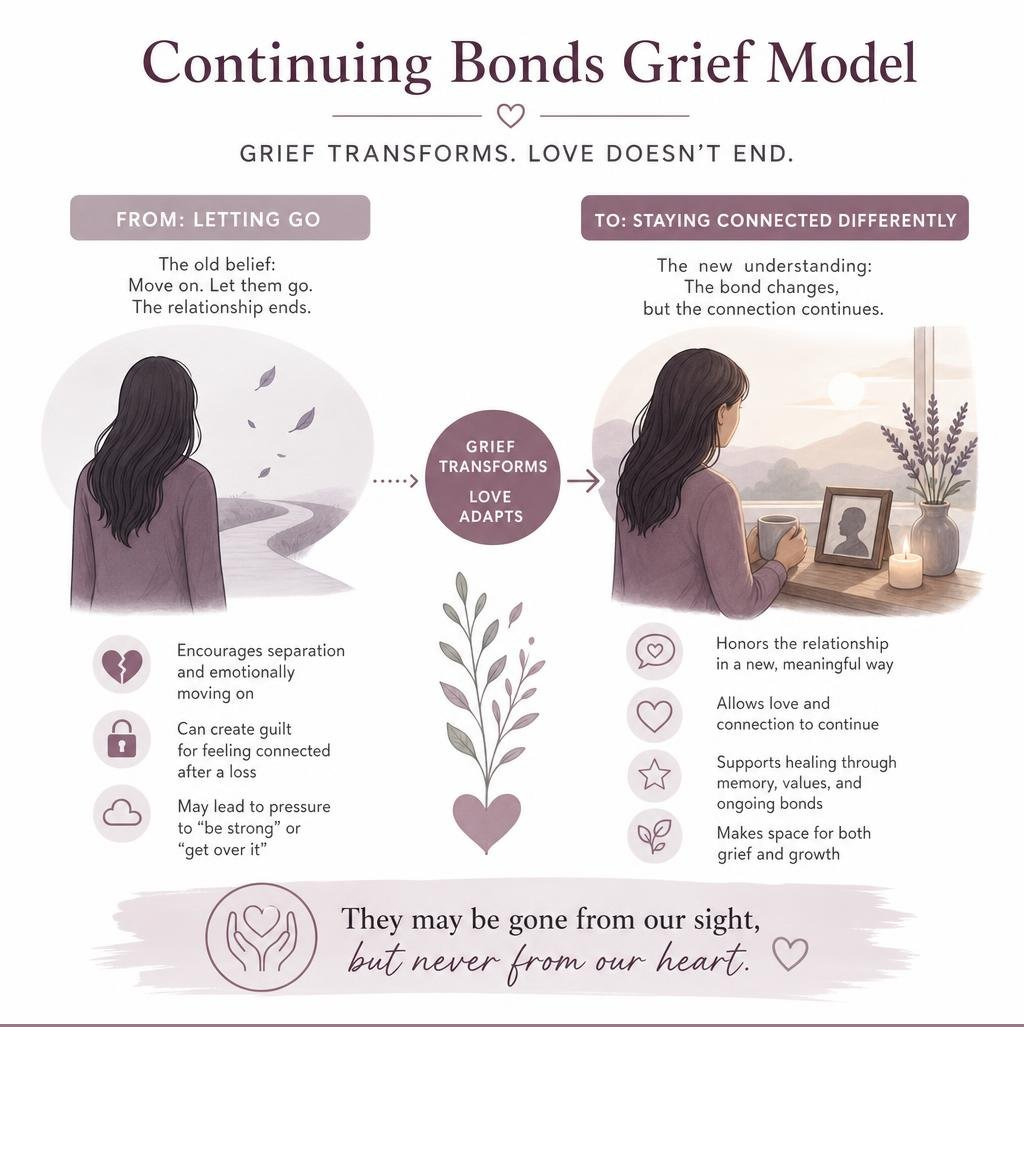
The continuing bonds grief model is a framework that says maintaining an ongoing connection with someone who has died is a normal and often healthy part of grieving. Rather than pushing people to “let go” or “move on,” this model recognizes that relationships do not simply end at death. They transform.
Here is a quick overview of the core idea:
- What it is: A grief theory introduced in 1996 and expanded by newer bereavement research showing that ongoing bonds with the deceased are common and can support healing
- What it challenges: Older models rooted in Freud’s work that treated continued attachment to the deceased as a sign of pathological grief
- What it looks like: Talking to a loved one’s photo, keeping meaningful objects, carrying forward their values, feeling their presence on important days
- What newer research shows: A systematic review of 79 studies involving over 13,000 bereaved individuals found that continuing bonds have both comforting and distressing potential. Outcomes depend on the type of bond, the circumstances of the death, and the individual
- Who it helps most: People who feel guilt or shame for not being “over” a loss, or who worry that staying connected to the deceased is somehow wrong
Grief is not a problem to be solved. For many people, the most painful part of loss is being told they should feel less, not more, connected to the person they loved.
This guide walks through everything you need to know: the research, the real-world examples, when continuing bonds help, when they may not, and how grief counseling can support you through it all. It treats the original 1996 framework as an important starting point, while also incorporating newer continuing bonds grief research that offers a more nuanced view.
At Stegall Counseling, PLLC, we work with adults, families, and couples navigating some of life’s most difficult transitions, including grief and loss where the continuing bonds grief model often becomes a turning point in how people understand their own healing. If what you read here resonates, I’d encourage you to keep going. This guide is designed to meet you wherever you are.
What Is the continuing bonds grief model?
The continuing bonds grief model says that grief is not primarily about cutting emotional ties with someone who died. Instead, grieving often involves finding a new way to relate to that person in their physical absence.
That bond may be quiet and internal, such as remembering a loved one’s advice before making a decision. It may be concrete, such as wearing their watch. It may be spiritual, such as feeling comforted by a sense of presence. The key idea is not that the person is still physically here, but that the relationship continues in a changed form.
This model also makes room for a truth many bereaved people already know: acceptance and connection can coexist. Accepting that someone has died does not require erasing their role in your life.
| Detachment-based grief views | Continuing bonds grief model |
|---|---|
| Healthy grief means emotionally separating from the deceased | Healthy grief may include an ongoing inner relationship |
| “Moving on” is often treated as the goal | Relationship transformation is often the goal |
| Continued attachment may be seen as concerning | Continued attachment can be normal and meaningful |
| Grief is often framed as something to complete | Grief is understood as non-linear and evolving |
| Focus is on relinquishment | Focus is on adaptation, meaning, and connection |
Who Introduced Continuing Bonds Theory?
Continuing bonds theory became widely known through the work of Dennis Klass, Phyllis Silverman, and Steven Nickman in the 1990s. Their work challenged the older idea that healthy grief requires emotional detachment from the person who died.
The key point is simple: many bereaved people continue to feel connected to loved ones after death, and that connection is not automatically unhealthy. Later research has built on this idea by looking more closely at which kinds of bonds are comforting, which may feel distressing, and how culture, trauma, spirituality, and relationship history shape the grieving process.
How the continuing bonds grief model differs from traditional grief theories
Earlier Western grief theories were strongly influenced by Sigmund Freud’s grief work model and later attachment-based interpretations that often emphasized detachment, relinquishment, or “closure.” In simple terms, many older approaches assumed that the bereaved person’s task was to withdraw emotional energy from the deceased so they could reinvest in life.
The continuing bonds model challenged that assumption.
It does not say people should live in the past. It does not say grief should never change. It does not say all bonds are helpful. What it says is that love, memory, identity, and attachment do not disappear just because death has occurred.
This was a major paradigm shift. Behaviors once viewed with suspicion, such as talking to a deceased partner, keeping belongings, visiting a grave, or imagining what a loved one would say, came to be understood as common and often adaptive.
Recent research supports a more nuanced view: continuing bonds can be comforting, identity-supporting, and meaningful, but they can also be distressing depending on context.
How People Maintain Continuing Bonds in Everyday Life

People maintain continuing bonds in ordinary, deeply personal ways. Often, these practices are so woven into daily life that people do not think of them as “grief behaviors.” They are simply ways of loving someone who is no longer physically present.
Common continuing bond practices include:
- Keeping photos, clothing, jewelry, letters, or other meaningful objects
- Talking to the deceased privately or aloud
- Visiting a grave, memorial site, or meaningful location
- Lighting a candle on birthdays, anniversaries, or holidays
- Cooking a loved one’s favorite meal
- Continuing family traditions they valued
- Writing letters or journaling to them
- Asking, “What would they want me to remember right now?”
- Telling stories about them to children or family members
- Carrying forward their values, work, humor, faith, or commitments
- Creating a memory box or digital album
- Participating in memorial acts or legacy projects
- Noticing dreams, signs, or a felt sense of presence
If grief has left you wondering whether your connection is “normal,” our page on Grief and Loss Counseling offers more support for understanding loss with compassion.
Concrete and Symbolic Bonds
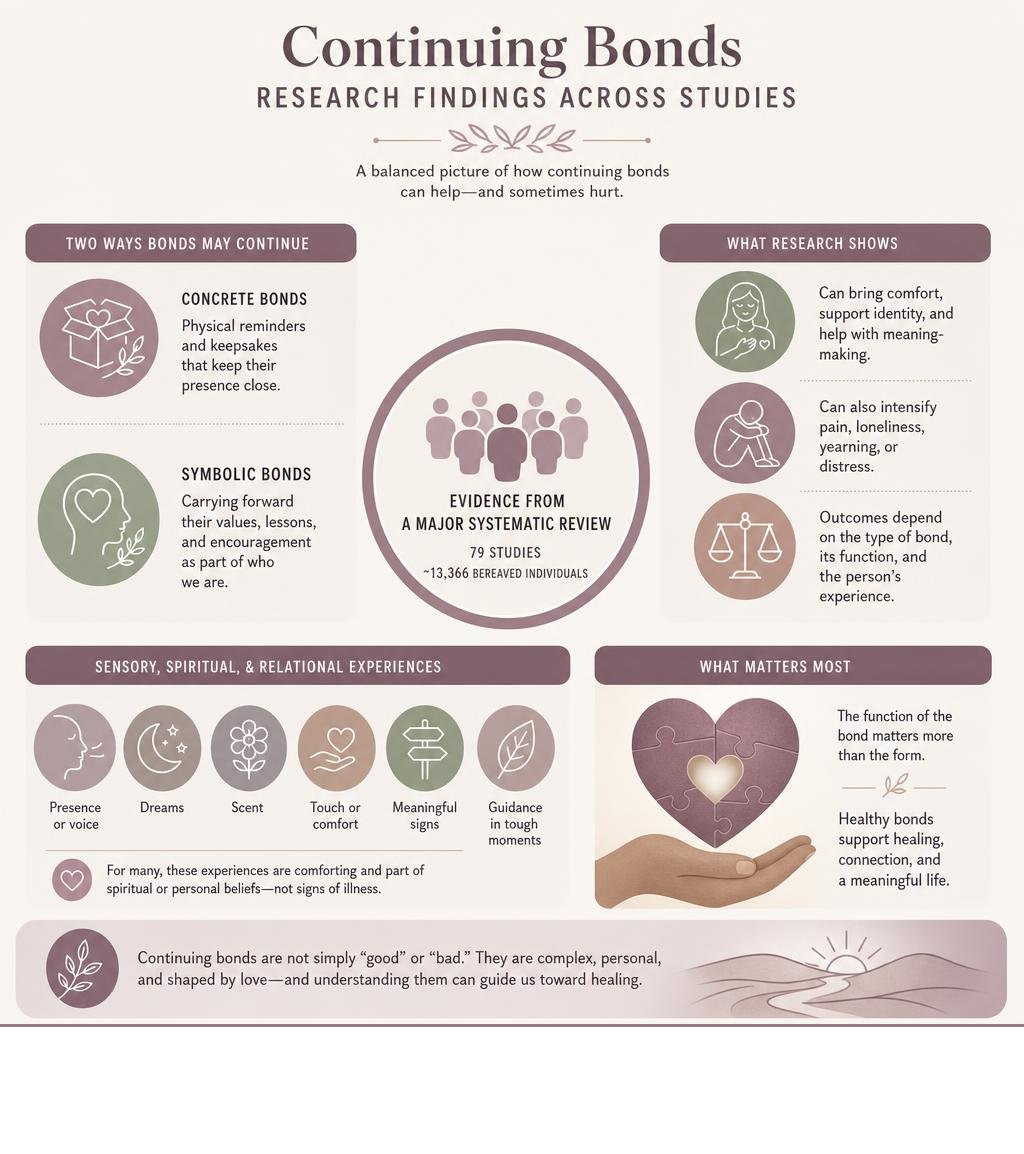
Researchers often distinguish between concrete and symbolic continuing bonds.
Concrete bonds involve physical objects or tangible practices. These may include:
- Clothing
- Jewelry
- Photographs
- Handwritten notes
- A favorite chair
- A recipe card
- A memory box
- A blanket, toy, or other keepsake
Symbolic bonds are less about objects and more about meaning. These include carrying forward a loved one’s values, seeing them as a role model, living by lessons they taught, or using their imagined encouragement as a source of strength.
For example, someone might think, “My dad would want me to keep going,” or “My partner taught me how to be brave.” In these moments, the bond becomes part of identity and decision-making.
Research on concrete and symbolic bonds suggests that symbolic bonds may be especially connected with grief resolution, while intense or prolonged reliance on concrete bonds can sometimes be associated with more distress. That does not mean keepsakes are bad. It means the function of the bond matters. You can read more in this Continuing Bonds Scale research.
Sensory, Spiritual, and Relational Experiences
Many bereaved people report sensory or spiritual experiences after a death. These may include:
- Feeling the deceased person’s presence
- Hearing their voice internally or briefly
- Seeing them in a dream
- Smelling a familiar scent
- Feeling touched or comforted
- Noticing signs that feel meaningful
- Sensing guidance during a difficult moment
Research often calls these sensory and quasi-sensory experiences. They are not automatically signs of illness. For many people, they are comforting and fit within spiritual or religious beliefs.
At the same time, some experiences can be frightening, intrusive, or confusing. A counselor should respond with careful assessment rather than immediate dismissal or automatic concern. The question is not simply, “Did this happen?” but also, “How are you experiencing it? Is it comforting, distressing, disruptive, or connected to trauma?”
Many people do not share these experiences because they fear judgment. That silence can make grief lonelier than it already is.
What Newer Research Says About Continuing Bonds and Grief Outcomes
Newer research gives us a more balanced picture than the early “continuing bonds are healthy” summary many people first hear. The original 1996 framework opened the door, but later empirical research has helped clarify when continuing bonds are most likely to support adaptation and when they may be linked with distress.
A major systematic review on continuing bonds outcomes reviewed 79 studies representing approximately 13,366 bereaved individuals. The review found that continuing bonds can bring comfort, support identity, and help with meaning-making. But the same bonds can also intensify pain, loneliness, yearning, or distress.
A related open-access source is available through this continuing bonds research article.
Important findings include:
- Across included studies, 73% of participants were women and 22% were men, showing that bereavement research samples are often gender-skewed.
- Continuing bonds were linked to three broad themes: comfort and distress, ongoing relational identity, and spiritual or meaning-based interpretation.
- Internalized bonds often appeared more adaptive than externalized or intrusive bonds.
- The impact of the bond depended on circumstances such as suddenness of death, trauma, relationship quality, guilt, culture, and spiritual meaning.
In short: continuing bonds are not automatically good or bad. They are personal, contextual, and dynamic.
Benefits Reported by Bereaved People
Bereaved people often describe continuing bonds as a source of:
- Comfort
- Emotional closeness
- Reduced isolation
- Motivation
- A sense of guidance
- Ongoing love
- Identity continuity
- Spiritual reassurance
- Personal growth
- Meaning-making
For some, the deceased becomes a secure base: an internal source of strength that helps them face life. A widowed person may feel steadied by remembering a partner’s confidence in them. A bereaved parent may continue parenting through memory, advocacy, storytelling, or ritual. A child may carry a deceased parent’s voice as part of their developing identity.
Continuing bonds can also support post-traumatic growth. This does not mean the death was “for a reason” or that pain becomes positive. It means some people find ways to live with greater purpose, compassion, or clarity because of the relationship they continue to carry.
When the continuing bonds grief model may not feel helpful
The continuing bonds grief model should never be used as a rule that everyone must stay connected in a particular way. Some people do not want an ongoing bond. Others want one but find it painful. Still others feel trapped by guilt, anger, fear, or unresolved conflict.
Continuing bonds may be less helpful or more distressing when there is:
- Sudden or traumatic death
- Suicide bereavement
- Violent loss
- Unresolved guilt
- A highly conflicted relationship
- Abuse, coercion, or betrayal in the relationship
- Strong dependency before the death
- Intrusive sensory experiences
- Difficulty accepting the reality of the death
- Severe impairment in daily functioning
- Ongoing avoidance of life, relationships, or responsibilities
One study on abrupt versus gradual separation found that strong non-relinquishment after unexpected death was associated with more difficulty adjusting over time.
The systematic review also found that 4.8% of individuals bereaved by suicide in one sample reported spiritual experiences of the deceased as harmful. In another finding, 26.4% of bereaved mothers associated transitional objects with heightened distress after child loss.
These numbers matter because they protect us from oversimplifying grief. Continuing bonds can help. They can also hurt. Good care makes space for both truths.
Internalized vs. Externalized Bonds
A useful distinction in the research is internalized versus externalized bonds.
Internalized bonds often involve:
- Memories
- Values
- Lessons learned
- Imagined encouragement
- Role modeling
- A felt sense of secure connection
- Integration into identity
Externalized bonds may involve:
- Persistent searching for the deceased
- Intense reliance on signs or appearances
- Distressing voices, visions, or illusions
- Experiences that keep the person feeling unable to live in the present
Internalized bonds are often associated with adaptation because the bereaved person can carry the relationship while still engaging with life. Externalized bonds are not automatically harmful, especially in early grief or spiritual contexts, but they may require more careful attention if they are frightening, impairing, or connected to prolonged grief.
Cultural, Spiritual, and Family Meanings of Continuing Bonds
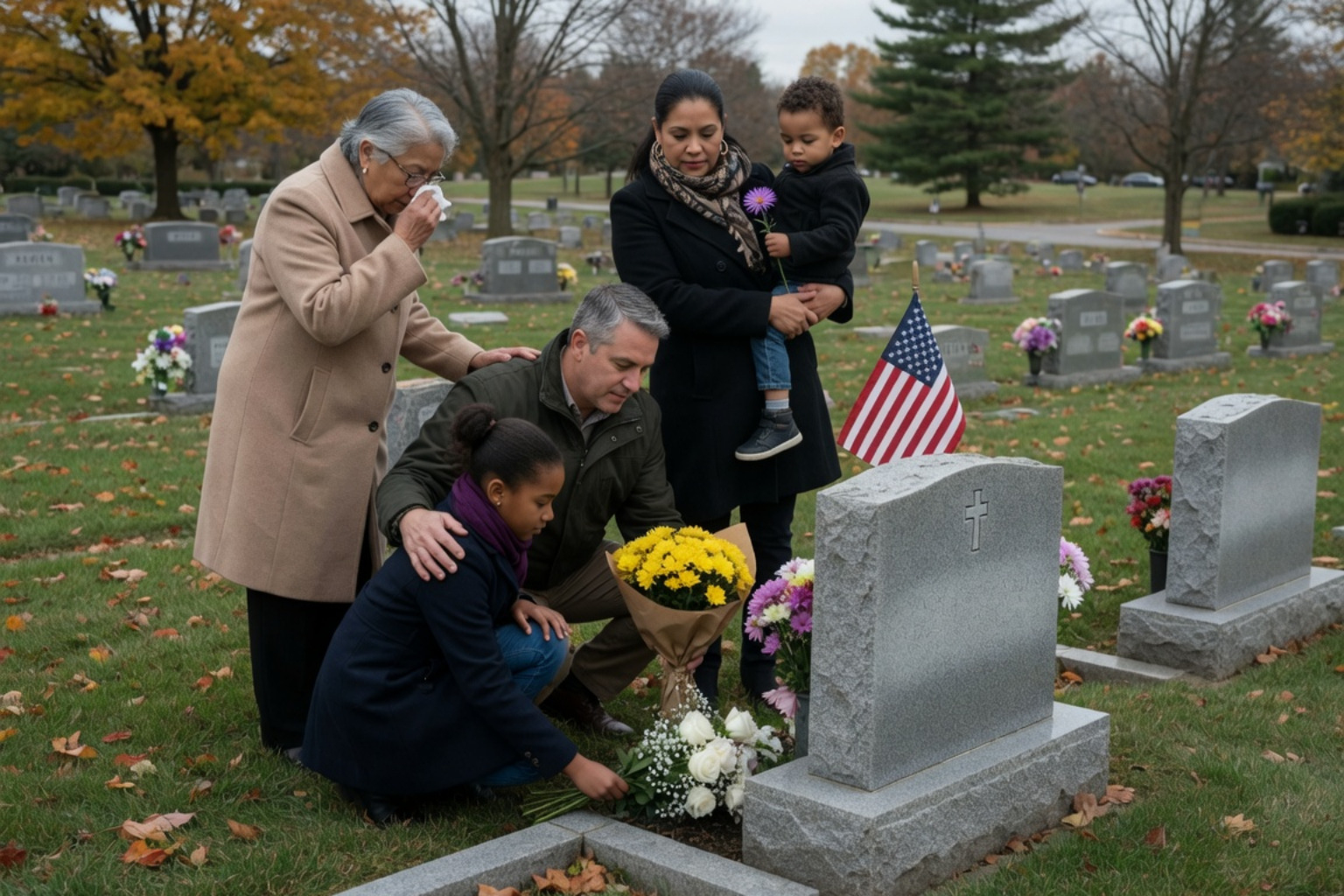
Culture, spirituality, and family tradition deeply shape how continuing bonds are understood.
In some families, talking to ancestors, praying for the dead, visiting graves, or setting a place for a deceased loved one during holidays is normal and meaningful. In other families, the same behavior may be misunderstood or criticized.
Some religious and spiritual beliefs frame the dead as present, watchful, guiding, or still connected to the living. Others emphasize memory, legacy, resurrection, reunion, ancestral belonging, or sacred ritual. The continuing bonds model does not require one belief system. It simply recognizes that people interpret connection through the meaning systems they already hold.
How Culture Shapes Whether Bonds Feel Comforting or Concerning
A bond that feels comforting in one cultural or spiritual context may feel alarming in another. For example, sensing a loved one’s presence may be interpreted as a blessing, a sign, a memory response, or a distressing experience depending on the person’s beliefs and community.
Culture shapes:
- What grief expressions are considered normal
- Whether people speak openly about the dead
- How graves, altars, photos, or memorial objects are used
- Whether dreams are considered meaningful
- How family stories preserve identity
- Whether ongoing connection is encouraged or stigmatized
- How quickly others expect the bereaved person to “return to normal”
Counselors need cultural humility here. The goal is not to tell people what their bond means. The goal is to understand what it means to them.
Common Misconceptions and Stigmas
Common misconceptions about continuing bonds include:
- “If you talk to them, you are not accepting the death.”
- “You should be over it by now.”
- “Keeping their things means you are stuck.”
- “Closure means no longer feeling connected.”
- “Healthy grief means not crying anymore.”
- “Dreams or sensed presence always mean something is wrong.”
- “If you still miss them, therapy is not working.”
These beliefs can create shame. They also silence people who need room to remember.
Continuing bonds do not mean denial. Denial is refusing to accept the reality of the death. Continuing bonds mean accepting that the relationship has changed and finding ways to carry love, memory, and meaning forward.
For a compassionate public-facing explanation of the concept, see this overview of continuing bonds in grief and this continuing bonds theory summary. For a lecture-style discussion, this continuing bonds video may also be useful.
How Counselors Can Integrate Continuing Bonds Into Grief Counseling
Counselors can integrate the continuing bonds model by approaching grief as relational, not just emotional. The clinical focus is not only “How sad are you?” but also “Who was this person to you, and how does that relationship live in you now?”
Because newer continuing bonds grief research shows both adaptive and distressing outcomes, counseling should not assume that every bond is healing or that every bond is harmful. The work is to understand the meaning, function, and impact of the bond for this specific person.
Effective grief counseling may include:
- Careful assessment of the relationship history
- Exploration of cultural and spiritual beliefs
- Screening for trauma symptoms
- Attention to guilt, anger, regret, or unfinished business
- Differentiating comforting bonds from distressing bonds
- Supporting meaning-making without forcing it
- Helping the client decide what kind of connection feels right
For losses involving trauma, pacing and safety are especially important. Our guide to Trauma Therapy explains how trauma-informed care can support people whose grief is complicated by fear, shock, or intrusive memories.
Assessment Questions for Healthy and Distressing Bonds
Counselors may gently explore questions such as:
- What helps you feel connected to your loved one?
- Does this connection bring comfort, distress, or both?
- Are there times when the bond feels intrusive or overwhelming?
- What do you believe your loved one would want for you now?
- Are there unresolved feelings of guilt, anger, fear, or regret?
- Has the bond affected sleep, work, parenting, relationships, or daily functioning?
- Was the death sudden, traumatic, violent, or expected?
- How does your family or community respond when you talk about the deceased?
- Do your spiritual beliefs help you make sense of the bond?
- Are there parts of the relationship that feel unsafe to revisit?
These questions help clarify the function of the bond. A bond that supports life, meaning, and emotional regulation is different from one that keeps someone trapped in fear or self-blame.
Therapeutic Practices That Support Adaptive Continuing Bonds
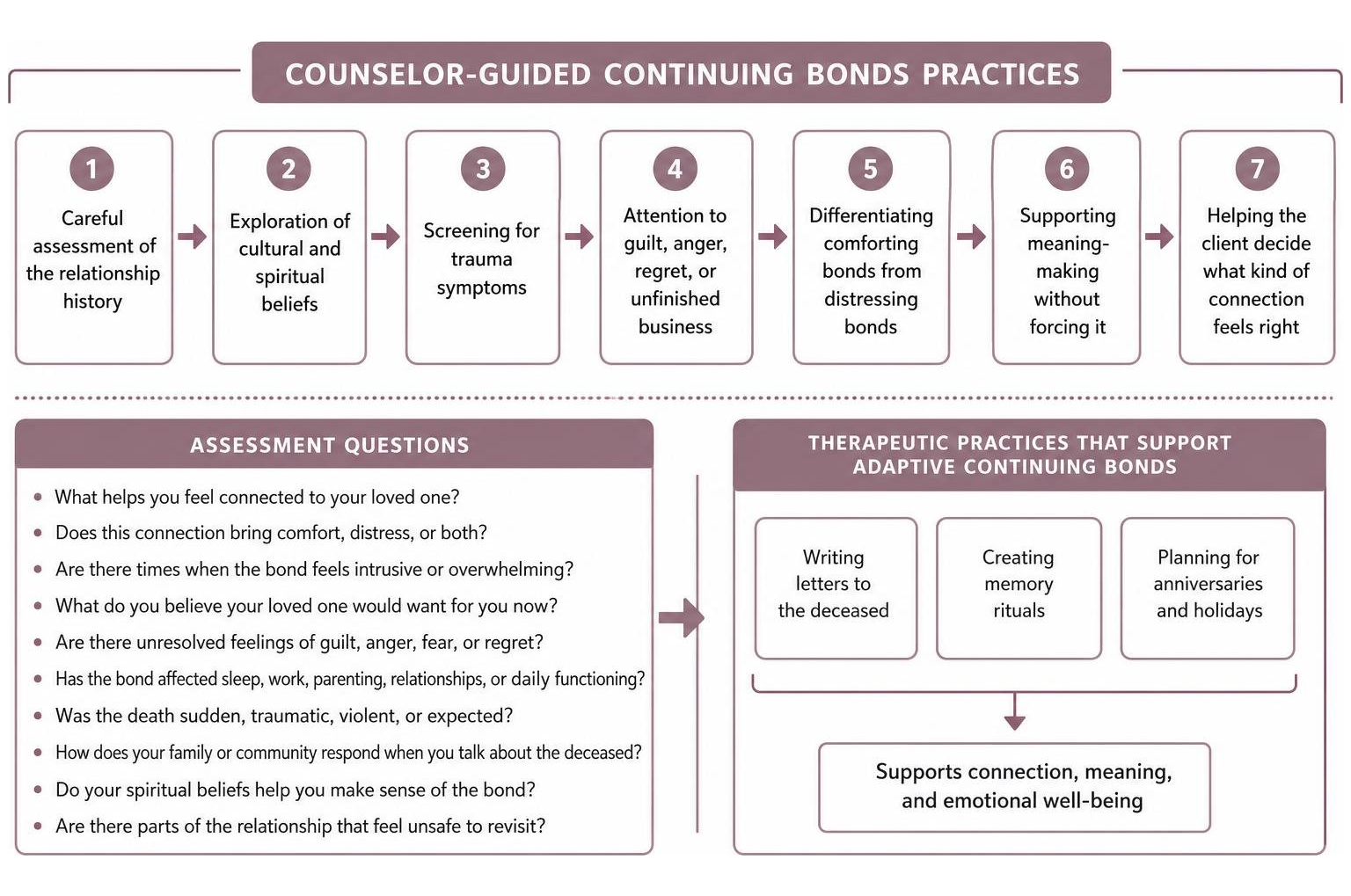
Counselor-guided continuing bond practices may include:
- Writing letters to the deceased
- Creating memory rituals
- Planning for anniversaries and holidays
- Building a memory box
- Mapping values the loved one passed on
- Telling the story of the relationship
- Exploring imagined dialogue
- Creating legacy projects
- Continuing meaningful roles in modified ways
- Integrating the deceased into the client’s life story
- Identifying what to carry forward and what to release
These practices should be offered with clear, respectful, and clinically grounded language. Grief counseling is not the place for humor-infused prompts or playful exercises that could minimize the seriousness of the loss. Even creative practices should be paced, consent-based, and emotionally safe.
Narrative work can be especially helpful. Instead of reducing grief to symptoms, narrative therapy approaches invite people to tell a fuller story: who the person was, what the relationship meant, what changed, what remains, and how the bereaved person is still becoming.
Our reflection on emotional release, Unburdening Your Soul, may also be helpful for people who are trying to put words to grief that has been held quietly for a long time.
Applying the Model With Children, Partners, and Trauma Survivors
With children, continuing bonds must be developmentally appropriate. Children may maintain bonds through drawings, stories, photos, rituals, play, or simple repeated conversations. They need clear language about death, reassurance that their feelings are welcome, and adults who can help them remember without fear. Learn more in A Practical Guide to Child Grief Counseling.
With partners, continuing bonds often involve identity. A surviving partner may ask, “Who am I now?” The relationship may continue through routines, values, internal conversations, family roles, or decisions shaped by the deceased partner’s memory. Research on spousal bonds, including continuing bonds in marriage and loss, highlights how internal representations of a partner can remain active after death.
With trauma survivors, counselors must move carefully. If the relationship involved betrayal, coercion, violence, or unresolved fear, maintaining a bond may feel confusing or harmful. In those cases, the work may involve boundaries, safety, anger, grief, and identity repair. Our guide on Recovering from Betrayal Trauma may be useful when grief overlaps with relational harm.
Frequently Asked Questions About the Continuing Bonds Grief Model
Is maintaining a bond with someone who died the same as refusing to accept the death?
No. Maintaining a bond is not the same as denying the death.
Acceptance means recognizing that the person has died and that the relationship can no longer continue in the same physical, everyday way. Continuing bonds mean the relationship continues through memory, meaning, values, ritual, spirituality, and identity.
A bond may become concerning if someone cannot acknowledge the death, cannot function, feels controlled by the bond, or experiences persistent distress that does not soften over time.
How long should continuing bonds last?
There is no fixed timeline.
For many people, continuing bonds last a lifetime. They may become quieter, softer, or more symbolic, but they do not necessarily disappear. A person may feel connected on anniversaries, during major life transitions, when raising children, during holidays, or in moments when they need guidance.
The question is not “How long is this allowed?” The better question is “How is this bond affecting your life now?”
Can continuing bonds support identity reconstruction after loss?
Yes. This is one of the most important contributions of the continuing bonds model.
Loss can shake identity. Someone may no longer know who they are as a spouse, child, parent, sibling, friend, or caregiver. Continuing bonds can help people rebuild by asking:
- What did this relationship teach me?
- What parts of them live on in me?
- What values do I want to carry forward?
- What roles have changed?
- What story do I want to tell about this love and this loss?
- How can I keep living while still honoring them?
This process is often called meaning-making or identity reconstruction. It helps grief become part of a life story rather than the end of the story.
Conclusion
The continuing bonds grief model offers a compassionate and research-informed way to understand grief. It tells us that healing does not always mean letting go. Sometimes it means staying connected differently.
The most important takeaways are:
- Continuing bonds are common and often normal.
- The theory became widely known through a major 1996 bereavement text.
- Bonds may be concrete, symbolic, sensory, spiritual, or relational.
- Research shows both benefits and risks.
- Internalized, meaning-based bonds are often more adaptive.
- Distressing, intrusive, or trauma-linked bonds deserve careful support.
- Culture and spirituality strongly shape how bonds are experienced.
- Continuing bonds can support identity, values, and meaning after loss.
At Stegall Counseling, PLLC, we support adults, families, and couples navigating grief, trauma, anxiety, depression, and major life transitions. If you are grieving and unsure what to do with the love that remains, you do not have to figure that out alone.
You can learn more about our grief and loss counseling support, explore our broader mental health specialties, visit Stegall Counseling, PLLC, or contact us when you are ready.