

Mental Wellness for the School Year
A Balanced School-Year Routine Supports Mental Health
Building a School-Year Routine That Supports Mental Health: Sleep, predictability, downtime, connection, movement, and realistic expectations. starts with a few steady habits, not a packed calendar or a perfect plan.
A supportive routine gives children and teens clear anchors for the day while leaving room to rest, adapt, and be themselves. The core pieces are:
- Sleep: Consistent sleep and wake times support mood, learning, physical health, and emotional control.
- Predictability: Repeated morning, after-school, and bedtime patterns can lower uncertainty and stress.
- Downtime: Quiet time and unstructured play help young people recover from busy school days.
- Connection: Small daily check-ins help children feel seen, safe, and more willing to share concerns.
- Movement: Active play, walks, sports, or other movement can support focus and emotional regulation.
- Realistic expectations: A routine should reduce conflict, not create pressure. Progress matters more than getting every step right.
Research links more frequent family routines with fewer externalizing behaviors in children and lower caregiver stress. This can be especially meaningful for families raising children with neurodevelopmental delays, who may benefit from simple, repeated steps and clear expectations.
At Stegall Counseling, PLLC, we understand that family routines can feel difficult when anxiety, depression, trauma, school stress, or burnout are already part of daily life. Our team supports children, teens, college students, adults, couples, and families who want a steadier, more supportive rhythm for the school year.

Why Predictability and Structure Protect Youth Mental Health
When children know what to expect, their nervous systems do not have to stay on high alert. Predictability provides a safety net that allows kids to spend less energy worrying about what comes next and more energy learning, playing, and making friends. Research consistently reveals that home environments lacking structure are associated with higher rates of internalizing symptoms, such as worry and sadness, as well as externalizing behaviors, like meltdowns and defiance.
For parents navigating The Back to School Rollercoaster A Parent Guide, setting up daily rhythms creates a psychological anchor. When a child experiences chaos or uncertainty at school, returning to a consistent household rhythm helps them decompress and regain emotional equilibrium.
The Science of Predictability and Behavioral Regulation
The human brain relies on external structure to develop internal regulation skills. Studies show that the frequency of regular family routines directly correlates with lower child externalizing behaviors. In longitudinal research, increasing routine consistency over time led to statistically significant reductions in behavioral outbursts.

Predictability also directly benefits caregivers. Lower routine consistency correlates with heightened parental stress. Furthermore, routine frequency acts as a stress buffer, especially for children with strong nonverbal cognitive skills, as visual and experiential cues reinforce expectations without requiring constant verbal commands. By reducing daily power struggles, predictable habits protect families from falling into coercive cycles where parent frustration and child resistance amplify one another.
Supporting Neurodivergent Children and Students Under Higher Stress
Caregivers of neurodivergent children, including those with ADHD, autism, or executive functioning differences, often carry higher day-to-day stress. Kids with verbal processing challenges or difficulty sequencing tasks may feel overwhelmed by multi-step directions like, “Get ready for school.”
To support neurodivergent youth, routines must be scaffolded into bite-sized, sequential actions:
- Break complex tasks into single, concrete steps.
- Use visual picture schedules placed at eye level.
- Incorporate gentle auditory cues, like a favorite song, to signal transition times.
- Maintain calm caregiver responses during moments of resistance to model emotional regulation.
When parents simplify expectations and maintain environmental stability, children feel far more secure, leading to fewer behavioral meltdowns and lower household stress.
Prioritizing Rest: How Sleep and Movement Power Learning and Mood
Sleep and movement are fundamental pillars of child development. Sleep fosters brain plasticity, allowing young minds to process daily learning, form neural connections, and consolidate memory. Without sufficient sleep, children struggle with impulse control, emotional reactivity, and focus.

Similarly, physical activity provides an outlet for excess energy and lowers baseline cortisol levels. Together, healthy sleep habits and daily movement create a physiological foundation for mental resilience throughout the academic year.
Optimizing Bedtime and Sleep Hygiene for Peak Brain Plasticity
According to pediatric guidance from clinical experts at Back-to-School Health & Childhood Wellness – MHEDS, sleep requirements vary significantly across age brackets:
- Preschoolers (ages 3 to 5): 10 to 13 hours total, including naps.
- Elementary and Middle School (ages 6 to 12): 9 to 12 hours per night.
- Teens (ages 13 to 17): 8 to 10 hours per night.
To avoid circadian shock when school begins, we recommend shifting sleep schedules gradually. Move bedtime and wake-up times 15 minutes earlier every two to three nights starting two weeks before classes start.
Screen light suppresses natural melatonin production, delaying sleep onset. Establishing a digital curfew 30 to 60 minutes before lights out, and keeping electronics out of bedrooms overnight, preserves sleep quality and prevents Monday morning slumps.
Integrating Daily Physical Movement to Boost Focus and Regulation
The Centers for Disease Control and Prevention recommends at least 60 minutes of moderate to vigorous physical activity daily for school-aged youth. Physical activity releases endorphins, burns off accumulated tension, and improves attention spans.
Integrating movement does not require signing up for every competitive sports team. Simple strategies include:
- A 10-minute morning walk or impromptu dance party before heading to the bus stop to sharpen focus.
- Unstructured playground play or biking right after school to release nervous energy.
- Family walks or indoor board games combined with light stretching during dark winter evenings.
Research indicates that just 10 minutes of targeted movement before academic tasks improves concentration, making physical activity an essential tool for emotional regulation.
Building a School-Year Routine That Supports Mental Health: Sleep, Predictability, Downtime, Connection, Movement, and Realistic Expectations
A successful schedule balances essential responsibilities with genuine rest. When families aim for harmony rather than perfection, daily habits become a source of comfort rather than a source of pressure. Pediatric experts emphasize that establishing manageable household patterns through resources like Make Back-to-School Season Easier by Establishing Healthy Routines allows children to build lasting self-regulation skills.

To explore strategies for keeping kids grounded during stressful weeks, review our guide on Emotional Regulation Tips.
Practical Morning and Evening Checklists for Stress-Free Transitions
Morning chaos often sets an anxious tone for the whole day. Shifting preparation to the previous evening creates buffer time and prevents frantic searches for misplaced items.
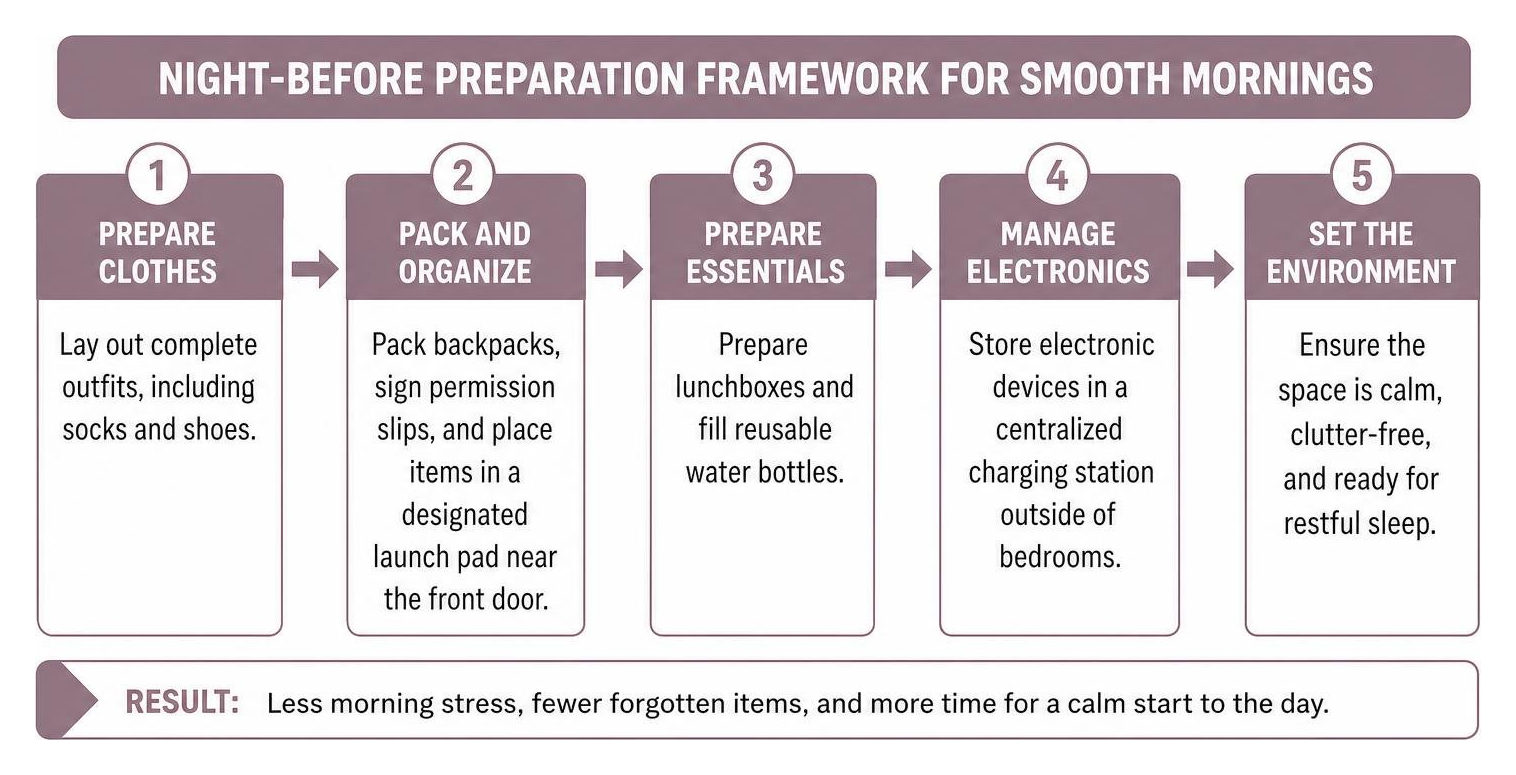
Evening Preparation Checklist:
- Lay out complete outfits, including socks and shoes.
- Pack backpacks, sign permission slips, and place items in a designated launch pad near the front door.
- Prepare lunchboxes and fill reusable water bottles.
- Store electronic devices in a centralized charging station outside of bedrooms.
Morning Launch Checklist:
- Follow a simple sequence: wake up, wash face, dress, eat breakfast, brush teeth.
- Use visual or written checklists so kids can track their own progress.
- Build in a 10-minute time cushion to handle unexpected spills or delays without raising panic.
- Keep drop-off goodbyes short, confident, and affectionate to minimize separation anxiety.
Making Room for Downtime
Overscheduling is a leading contributor to student burnout and parent exhaustion. While extracurricular activities provide rich learning opportunities, children also need unstructured downtime to rest, reflect, and engage in creative play.

Protecting downtime requires intentional boundaries:
- Limit scheduled after-school activities to allow for quiet rest.
- Build an immediate wind-down window right after school before jumping into homework.
- Set realistic academic boundaries, using the ten-minute rule per grade level for homework duration.
- Encourage screen-free hobbies like reading, drawing, or free play during afternoon downtime.
Building Connection Into the Day
Emotional connection acts as a buffer against daily anxiety. Children who feel securely connected to their caregivers are better equipped to express their feelings and handle academic challenges.
We recommend creating low-pressure moments for open communication:
- Use car rides or walking trips to chat casually without forcing direct eye contact.
- Provide a healthy snack immediately after school pickup to prevent hunger-induced emotional crashes before asking about their day.
- Replace generic questions like “How was school?” with open-ended prompts such as “What made you laugh today?” or “What was the trickiest part of your morning?”
- Practice reflective listening without rushing to fix every problem immediately.
For practical scripts on navigating difficult conversations, visit our resource on How to Start Mental Health Conversations.
What to Do When Routines Fall Apart and School Transitions Spike Anxiety
Even the most carefully crafted schedule will occasionally hit snags. Illness, sudden life changes, or major developmental shifts can temporarily disrupt family harmony.
When routines break down, caregivers can view the shift as feedback rather than failure. Flexibility and patience allow families to reset without lingering guilt.
Handling Transition Meltdowns with Emotional Regulation
Behavioral meltdowns over seemingly minor triggers, such as clothing choices or breakfast foods, often signal hidden anxiety about school expectations. When a child experiences sensory overstimulation or emotional distress, arguing or applying immediate logical consequences can heighten their distress.
Instead, caregivers can focus on co-regulation:
- Maintain a calm, neutral tone of voice.
- Ensure safety and validate feelings using simple statements like “I see that you are feeling overwhelmed right now.”
- Offer ground techniques to reset the nervous system. Our article on Feeling Overwhelmed Take Control with the TIPP Skills outlines actionable sensory cooling and deep breathing strategies.
- Re-anchor the child into the daily schedule once physical agitation subsides.
When a routine breaks down, families can learn from the experience using guidance from our post on how to Reset Move Forward After Failed Resolutions Charlotte NC.
Partnering with Teachers and School Counselors
When emotional distress or behavioral challenges persist beyond the initial two to three weeks of a new school term, collaborating with school staff becomes essential. Teachers and counselors can offer valuable insights into how your child manages transitions in the classroom.
Effective partnership strategies include:
- Reaching out early to share your child’s strengths, triggers, and successful home routines.
- Requesting regular, informal updates regarding behavioral progress and peer interactions.
- Aligning homework expectations and classroom support strategies to maintain home-school consistency.
- Seeking guidance from a school counselor or mental health professional if anxiety causes persistent school avoidance, stomachaches, or crying spells past three weeks.
Frequently Asked Questions About Building a School-Year Routine
How much sleep do children and teens need during the school year?
Recommended sleep duration varies by age bracket according to guidelines from pediatric medical authorities:
- Preschoolers (ages 3 to 5) need 10 to 13 hours per day including naps.
- Elementary and middle school students (ages 6 to 12) require 9 to 12 hours of uninterrupted night sleep.
- Teenagers (ages 13 to 17) need 8 to 10 hours per night.
Consistency is key. Keeping weekend sleep schedules within one hour of weekday wake times prevents sleep debt and reduces Monday morning fatigue.
How long does normal back-to-school anxiety last before seeking professional help?
Mild back-to-school jitters, such as nervousness about new teachers or making friends, typically resolve within one to two weeks as daily predictability is restored.
However, caregivers should consult a counselor or pediatrician if distress lasts longer than three weeks or includes persistent red flags:
- Daily tearfulness or complete refusal to attend school.
- Unexplained physical complaints like frequent stomachaches or headaches before school.
- Major shifts in eating, sleeping, or social engagement.
- Severe behavioral regressions or intense panic symptoms.
How can busy parents balance structured routines without creating a high-pressure home environment?
Creating structure should simplify family life, not turn your home into a boot camp. Parents can maintain a balanced, low-stress rhythm by prioritizing consistency over perfection:
- Focus on anchor habits first, such as fixed wake times, family mealtimes, and bedtime wind-down rituals.
- Add buffer time into morning and evening transition windows to absorb unexpected delays.
- Embrace flexibility when special events or fatigue arise, returning to normal steps the following day without self-criticism.
- Focus on effort and progress rather than expecting flawless execution every day.
Conclusion
Establishing a balanced school-year schedule requires balancing structure with flexibility. By prioritizing restful sleep, environmental predictability, intentional downtime, open communication, physical movement, and realistic expectations, families can cultivate a supportive home rhythm that fosters emotional resilience and academic success.
When daily challenges feel heavy or persistent anxiety interferes with family life, guidance from a qualified therapist can make all the difference. At Stegall Counseling, PLLC, located in Indian Trail, NC, we offer compassionate therapy for children, teens, and adults navigating school stress, anxiety, and life transitions.
To explore options for personalized support, Find compassionate anxiety therapy for your family today.