

The Complete Guide to Coping with College Anxiety
What College Anxiety Looks Like and Why It Is So Common
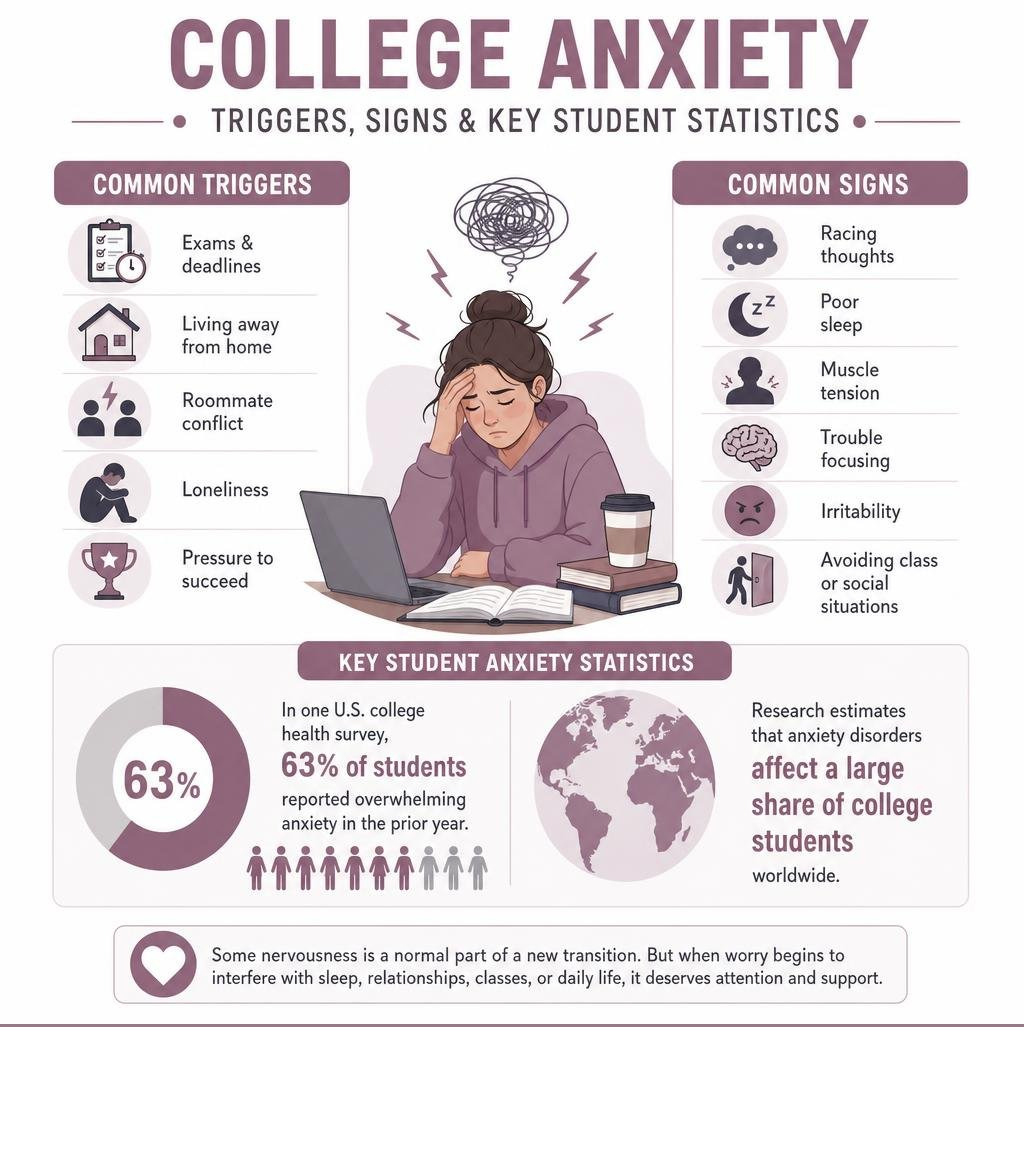
College anxiety is persistent worry, fear, or physical stress related to academic demands, social life, money, independence, or uncertainty about the future. It is common during college because students are managing major life changes while trying to meet new expectations.
- Common triggers: Exams, deadlines, living away from home, roommate conflict, loneliness, and pressure to succeed.
- Who is affected: Anxiety can affect any student, but the first year and the start of a semester can be especially stressful.
- What it may feel like: Racing thoughts, poor sleep, muscle tension, trouble focusing, irritability, panic, or avoiding class and social situations.
- How common is it: In one U.S. college health survey, 63% of students reported overwhelming anxiety in the prior year. Research also estimates that anxiety disorders affect a large share of college students worldwide.
Some nervousness is a normal part of a new transition. But when worry begins to interfere with sleep, relationships, classes, or daily life, it deserves attention and support.
At Stegall Counseling, PLLC, we understand that college anxiety can feel isolating for students and worrying for parents. Our team supports college students, young adults, and families with compassionate care that makes space for both the pressure of school and the person experiencing it.
Understanding College Anxiety: Triggers and Risk Factors

When students leave high school behind, they enter a world filled with high expectations and unfamiliar routines. The transition brings exciting freedom, but it also removes the built-in safety nets of home life. Managing schedules, preparing meals, and navigating new social circles all happen simultaneously while holding down heavy academic course loads.
For many young adults, the onset of a new term brings acute tension. According to the Psychology Today guide on semester stress, beginning-of-semester anxiety surfaces because daily schedules are not yet anchored, course expectations feel overwhelming, and support systems are still forming. This spike in stress often peaks during the first year, as psychological distress rises sharply in the initial semester and stays elevated throughout the second.
High-risk transition windows happen when uncertainty is at its peak. Moving into a dorm with a stranger can trigger significant worry: survey data shows over 70% of incoming students feel nervous about dorm living, while 64% worry about making friends, and 60% worry about fitting in. When daily stability vanishes overnight, college anxiety can quickly take root.
Emerging Adulthood and Academic Pressure
The college years coincide directly with a key developmental phase known as emerging adulthood, spanning ages 18 to 30. During this period, the brain is still undergoing vital maturation. Neurological development in the prefrontal cortex, the area responsible for impulse control, long-term planning, and emotional self-regulation, continues well into a person’s mid-twenties. Expecting full emotional mastery while the brain is still refining these complex networks can create intense internal friction.
At the same time, academic stress has reached unprecedented levels. Modern grading structures, constant evaluation, and competition for graduate placements can turn learning into an exercise in dread. As detailed in Research on student stress and learning, chronic academic pressure can alter neural pathways in the prefrontal cortex and hippocampus, blunting natural dopamine responses and making memory encoding much harder. When perfectionism replaces curiosity, students often operate in a continuous fight-or-flight state.
Recognizing Signs of College Anxiety in Daily Life
College anxiety does not stay confined to a student’s thoughts. It exhibits clear physical, emotional, and behavioral patterns that impact daily functioning:
- Physical symptoms: Chronic muscle tension, rapid heart rate, digestive trouble, frequent headaches, shallow breathing, and sudden panic attacks.
- Sleep disruption: Inability to fall asleep due to racing thoughts, waking up early in a panic, or irregular sleep schedules caused by late-night studying.
- Behavioral changes: Skipping classes, procrastinating on major assignments, avoiding campus dining halls, and isolating inside a dorm room.
- Emotional distress: Persistent irritability, overwhelming self-doubt, tearfulness, and feelings of helplessness.
Understanding these reactions can help prevent a downward spiral. Exploring our article on Are My Emotions Valid? Understanding Emotional Regulation and Overwhelming Feelings provides helpful insights into how physical body signals reflect underlying emotional strain.
Risk Factors Across Family, School, and Society
Anxiety rarely stems from a single event. It usually grows out of a mix of individual traits, family backgrounds, and broader societal dynamics:
- Family factors: Authoritarian parenting, hostile family communication, maternal overprotection, and ongoing household conflict can leave students with limited confidence in their independent coping abilities.
- Sociopolitical and economic strain: Lower socioeconomic status increases anxiety risks significantly. Financial pressure, tuition costs, and post-graduation job market uncertainty add constant background stress.
- Campus environment: High-pressure academic cultures, fierce peer competition, and insufficient institutional support create spaces where students feel unsafe showing vulnerability.
Effective Coping Strategies and Campus Interventions

When worry strikes, the natural human instinct is avoidance. Students might stay in bed, ignore email notifications from professors, or dodge social gatherings. While avoidance offers brief relief, it reinforces fear over time. Building resilience requires approach behaviors: taking tiny, deliberate steps toward the source of stress.
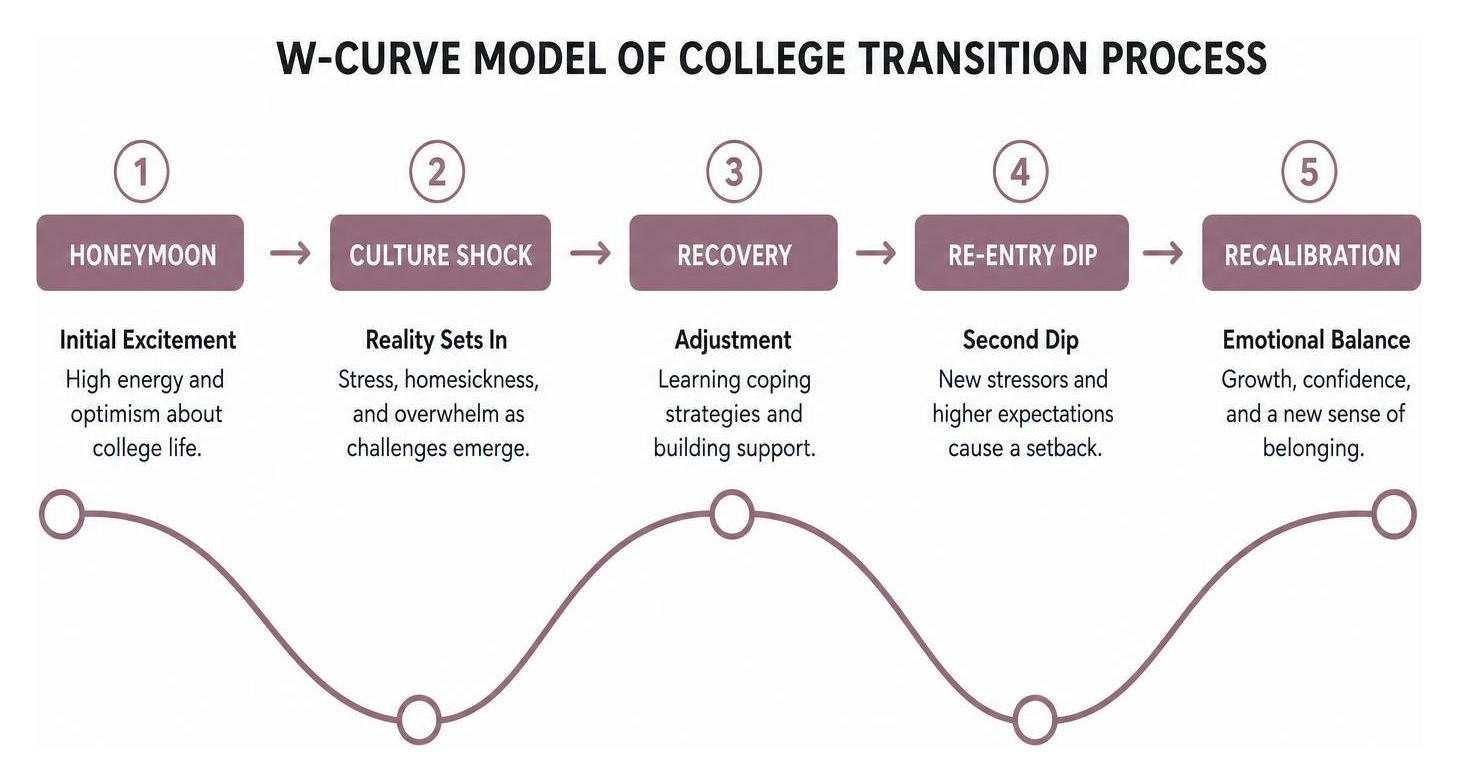
Understanding the normal emotional progression of campus life can help normalize these challenging feelings. The W-curve transition model illustrates how students move from initial excitement into culture shock, experience a recovery dip, and eventually reach emotional recalibration. Expecting these natural fluctuations helps keep temporary setbacks in perspective.
Practical Skills for Managing College Anxiety
When emotional intensity spikes, practical grounding techniques can help restore physical and mental stability. We frequently encourage young adults to utilize targeted regulation tools during moments of high distress:
- The TIPP skills: This Dialectical Behavior Therapy technique changes body chemistry quickly through Temperature (splashing cold water on the face), Intense exercise (a quick sprint or jumping jacks), Paced breathing (slow belly breaths), and Paired muscle relaxation. Read more about these strategies in our guide Feeling Overwhelmed? Take Control with the TIPP Skills.
- The RID framework: A cognitive reframing model where students Rename their anxious thought, Insist that they are in control of their actions, and Defy the anxiety by taking direct, opposite action.
- Grounding 3×3 exercise: When panic builds, pause and identify 3 things you can see, 3 things you can hear, and 3 things you can physically touch in your immediate space.
- Kinder self-talk: Replace catastrophic thoughts like “I am going to fail this exam and drop out” with realistic reframing: “This course is challenging, but I have prepared, passed past courses, and can ask for help.”
For additional actionable techniques, review our dedicated guide on Emotional Regulation Tips.
The Role of Sleep, Exercise, and Routine
Daily physical wellness habits serve as a primary buffer against chronic stress. Research published in Harvard Health insights on college stress confirms that sleep disruption, pulling all-nighters, and excessive caffeine intake are directly linked to heightened anxiety among young adults.
Building a stable physical routine involves a few foundational choices:
- Protecting sleep hygiene: Set fixed sleeping and waking times. Keep study materials off the bed so the brain connects the mattress exclusively with rest.
- Incorporating regular movement: Engaging in 30 minutes of aerobic exercise 3 to 5 times a week burns off excess stress hormones like cortisol and boosts mood-stabilizing endorphins.
- Managing dietary intake: Limit late-afternoon caffeine and restrict alcohol, as both disrupt deep sleep cycles and amplify physical anxiety symptoms the next morning.
- Creating functional boundaries: Set clear work hours for homework and dedicate time for meals without staring at a laptop or textbook.
Campus Resources and Mental Health Support
Colleges offer a variety of support structures designed to assist students through difficult periods. Knowing where to turn can make a significant difference in a student’s academic journey.
| Resource Type | Primary Focus | Best Used For |
|---|---|---|
| Academic Advising | Course scheduling, degree mapping, and academic accommodations | Managing course overloads, drops, or major changes |
| Wellness & Tutoring Centers | Subject tutoring, study skills, and time management coaching | Overcoming academic panic and skill gaps |
| Peer Mentoring Programs | Social connection, campus navigation, and shared experience | Reducing initial first-year isolation |
| Individual Outpatient Therapy | Professional mental health care tailored to personal goals | Treating clinical college anxiety, panic, and deep trauma |
Support Systems: How Parents and Colleges Can Help
Supporting a young adult through college anxiety requires a delicate balance between providing comfort and fostering independence. Both families and university institutions play crucial roles in creating environments where students can thrive.
How Parents Can Support Struggling Students
When an anxious college student calls home in distress, a parent’s instinct is often to step in and fix the problem immediately. However, rescuing a student can unintentionally signal that they are incapable of managing difficulties on their own.
Effective parental support relies on steady communication and clear validation:
- Validate before problem-solving: Start by acknowledging their discomfort with statements like, “That sounds exhausting, and I can hear how overwhelmed you feel.”
- Encourage agency: Ask empowering questions like, “What is one small step you can take today?” rather than giving rigid instructions.
- Use decision frameworks: Use simple models like “hat, haircut, or tattoo” to evaluate choices. A temporary choice is easily removed like a hat, a medium decision takes time to grow out like a haircut, while a permanent choice is like a tattoo. Most college worries fall into the hat or haircut categories.
- Normalize transitions: Remind them that feeling lost during early semester shifts is completely normal, not a personal failure.
For more helpful scripts, explore The Back-to-School Rollercoaster: A Parent Guide and our resource on How to Start Mental Health Conversations.
Systemic Actions for College Administrators
Higher education institutions have a structural responsibility to create compassionate, accessible environments. As highlighted in the Harvard GSE report on student isolation, nearly half of all college students experience deep loneliness, largely due to social disequilibrium during major life shifts.
Administrators can build better student ecosystems by implementing systemic policy shifts:
- Promoting micro-mentorship: Encouraging short, 10-minute supportive interactions between faculty and students during office hours to build belonging.
- Adopting flexible policies: Writing clear, compassionate attendance and deadline guidelines into course syllabi to accommodate life challenges.
- De-stigmatizing struggle: Normalizing mental health conversations during campus orientation and framing stress as an expected part of growth rather than a medical crisis.
- Lowering access barriers: Providing easy drop-in appointments, virtual options, and initial early screening systems.
Frequently Asked Questions About Student Stress
Why is student anxiety rising on campus?
The increase in campus stress stems from long-term social shifts rather than a single event. According to Epidemiological findings on student mental health, rising anxiety rates reflect long-term cohort trends over decades. Higher competition for admissions, escalating academic pressure, economic uncertainty, and heavy use of electronic communication have gradually replaced face-to-face social connections and healthy coping habits.
How does the pandemic impact student mental health?
The COVID-19 pandemic disrupted crucial high school and early college years, causing gaps in social development and self-regulation skills. While studies show that high student anxiety levels were already climbing prior to 2020, the pandemic intensified feelings of isolation, created adjustment delays, and made transitioning to independent campus living much harder for incoming cohorts.
When should a student seek professional counseling?
A student should seek professional help when college anxiety interferes with their ability to function daily. Warning signs include consistently missing classes, pulling away from friends, experiencing regular panic attacks, suffering from severe insomnia, or feeling completely unmotivated for weeks at a time. Professional therapy offers structured tools to process overwhelming stress and regain control.
Conclusion
Navigating college anxiety is a journey that requires time, self-compassion, and practical coping tools. Feeling overwhelmed by academic expectations, independent living, or social shifts does not mean a student is failing. With the right routines, clear grounding strategies, and open support networks, young adults can build deep resilience that serves them long after graduation.
At Stegall Counseling, PLLC, located in Indian Trail, NC, we are dedicated to walking alongside students and families as true partners in care. We offer a warm, relatable, humor-infused therapeutic space where young adults can feel understood, process life transitions, and develop skills for lasting mental well-being. If you or your college student are struggling to manage stress, reach out to explore our specialized Anxiety Therapy services today.