

The Complete Guide to Helping Your Child Make Friends
Why Friendship Conversations Matter for Kids
How to Talk to Your Child About Making Friends: Address loneliness, social anxiety, friendship changes, and belonging. Start with calm curiosity, not a plan to fix the problem. Listen for what your child is feeling, validate that rejection or worry can hurt, and focus on helping them feel safe and understood before discussing next steps.
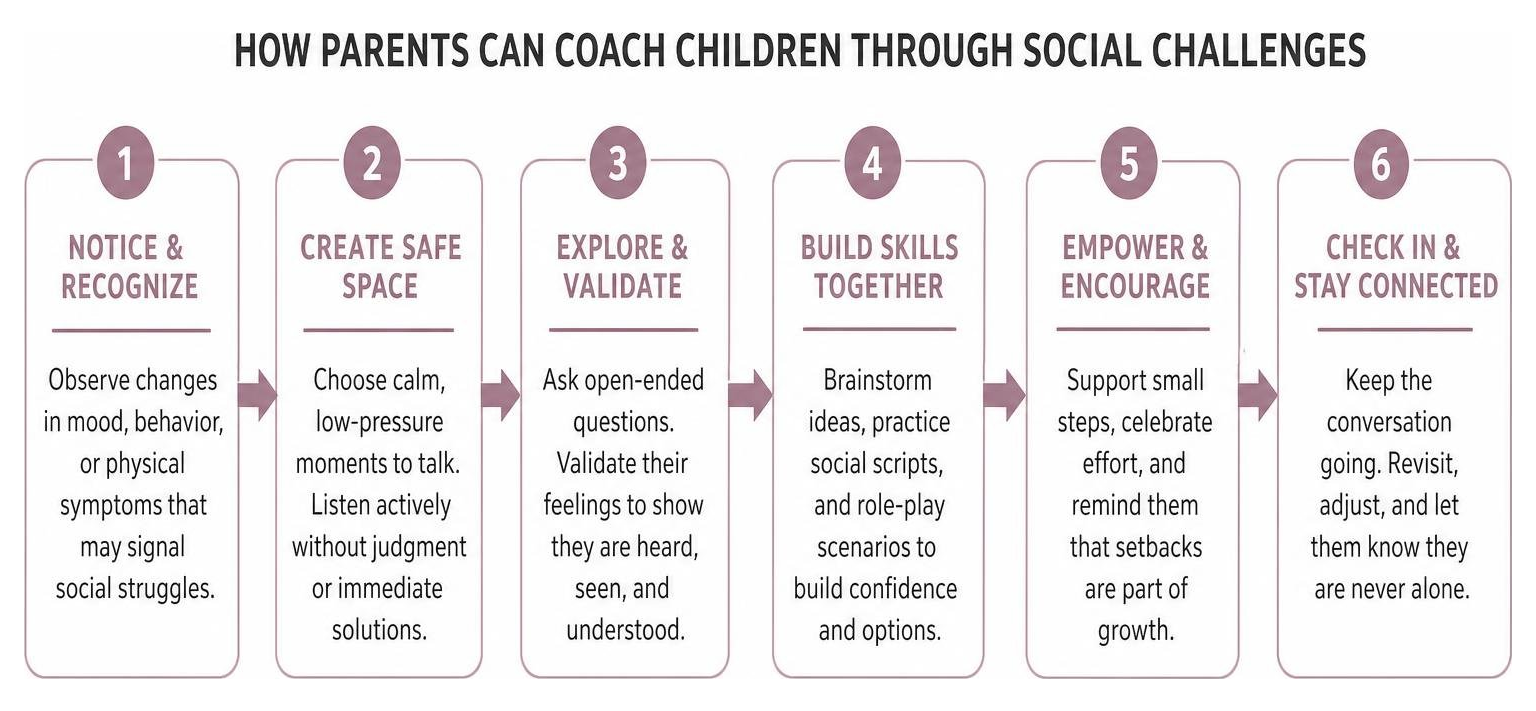
- Notice changes: Withdrawal, negative self-talk, avoiding school or activities, and sudden mood shifts can point to loneliness or social stress.
- Ask gently: Try, “Who did you spend time with today?” or, “Was there a moment today that felt awkward or hard?”
- Avoid labels: A child may be introverted and enjoy alone time, shy in new settings, or anxious because they fear judgment or rejection.
- Keep perspective: Children do not need to be popular. One or two supportive friendships can create a strong sense of connection and belonging.
Friendship struggles can be painful for both children and parents. A 2024 C.S. Mott Children’s Hospital poll found that 90% of parents believe their children want more friends, which makes it especially important to make room for honest, pressure-free conversations.
At Stegall Counseling, PLLC, our team of therapists helps individuals and families work through anxiety, relationships, and life changes. This guide to How to Talk to Your Child About Making Friends: Address loneliness, social anxiety, friendship changes, and belonging. is designed to help parents approach these moments with compassion and clarity.

Identifying the Difference Between Shyness, Introversion, and Social Anxiety
When a child spends recess alone or hesitates at birthday parties, it is natural for parents to feel a pang of worry. However, not every quiet child is struggling. To help effectively, we must first understand what is driving their behavior.
Introversion is a biological temperament, not a problem to fix. Introverted children regain energy through solo activities, drawing, reading, or playing with legos. They may prefer having one or two close friends rather than a large group, and they feel perfectly content in their own company.
Shyness, on the other hand, involves temporary hesitation or self-consciousness in new or unfamiliar settings. A shy child wants to connect with peers but needs extra time to warm up. Once they feel secure, they usually join in the fun.
Social anxiety goes deeper than simple shyness. It is rooted in an intense fear of rejection, embarrassment, or negative judgment. A child experiencing social anxiety might worry for days before a school event, express physical distress like stomachaches or headaches, or completely avoid social gatherings out of fear. Research from the Child Mind Institute highlights how distinguishing between shyness and anxiety helps parents accommodate a child’s temperament without inadvertently enabling social avoidance.
To better understand how anxiety manifests in younger populations, explore our comprehensive resource on Child Anxiety: A Parent’s Guide to Understanding and Support.

Spotting Hidden Signs of Loneliness and Social Distress
Children do not always say, “I feel lonely.” More often, loneliness and social exclusion show up through subtle changes in daily habits and emotional regulation.
Here are common signs that your child might be struggling with hidden peer isolation:
- Behavioral changes and irritability: A child who feels left out at school may return home with a short fuse, picking fights with siblings or reacting to small frustrations.
- Somatic complaints: Frequent tummy aches, tension, or fatigue before the school bus arrives can be physical symptoms of social dread.
- School refusal or morning resistance: Inventing excuses to stay home from school or dreading Sunday evenings often points to playground dynamics rather than academic difficulties.
- Emotional withdrawal: Retreating immediately to their bedroom after school, abandoning previously loved hobbies, or expressing persistent negative self-talk such as “Nobody likes me” signals deep emotional distress.
- Over-reliance on screens: While digital connections can be helpful, withdrawing entirely into video games or scrolling social media can be a defense mechanism against real-world rejection.
According to a report by CNN, unstructured back-to-school environments frequently highlight these struggles, making it vital for parents to notice behavioral shifts early.
How to Talk to Your Child About Making Friends: Building Safe Conversations
When we see our children hurting, our immediate instinct is to rush in and fix it. We might say things like, “Don’t worry, you’ll make new friends tomorrow!” or “Just walk up and say hi!” Although well-meaning, these quick fixes can make a child feel invalidated or unheard.
Building a safe environment for open dialogue requires active listening and low-pressure timing. Choose quiet, side-by-side moments when eye contact isn’t intense, such as during a car ride, while washing dishes, or during an evening walk.
Instead of asking broad questions like “Did you make any friends today?”, try these targeted, open-ended prompts:
- “Who was sitting near you at lunch today?”
- “Was there a time at recess when you felt a bit left out or awkward?”
- “What was the best part of your day, and was there a hard part?”
When your child shares something painful, prioritize validation over advice. A simple, “That sounds really tough, sweetie. I would feel sad too if that happened,” creates an emotional sanctuary. To explore how deep listening heals emotional distress, read our article on How Validation Can Transform Your Relationships.
How to Talk to Your Child About Making Friends: Address Loneliness, Social Anxiety, Friendship Changes, and Belonging
Parenting through a child’s social struggles requires us to act as a safe harbor, a steady anchor they can return to when peer dynamics feel stormy. When we remain calm and grounded, we send the message that their feelings are manageable and that they are never alone in handling them.

To initiate conversations about peer connections without causing defensiveness, we can draw from practical guidance on How to Start Mental Health Conversations. Focus on curiosity rather than investigation. If your child admits to sitting alone, resist the urge to immediately call the school or organize an emergency playdate. First, help them process their internal experience.
Practical Scripts When Kids Say “I Don’t Know What to Say”
It is incredibly common for children, especially pre-teens transitioning to middle school, to report feeling frozen in peer settings. They genuinely do not know how to start or sustain a conversation.
As noted by GreatSchools.org, practicing social scripts at home through playful role-play builds muscle memory for real-world interactions. Here are concrete scripts and strategies you can practice together:
- The Observation Icebreaker: Teach your child to notice what a peer is doing and make a casual observation. Script: “That’s a cool drawing! What are you building?”
- The Compliment Starter: Giving a genuine compliment creates instant warmth. Advise them to compliment items or actions rather than physical appearance. Script: “You are really good at kickball! How did you learn to kick like that?”
- The Shared Experience Anchor: Capitalize on current surroundings. Script: “Are you ready for this science test? I studied all night!”
- The Activity Invitation: Approaching a group can be daunting, but joining an ongoing activity is easier. Script: “Looks like you have four people for basketball. Do you need one more?”
You can role-play these scenarios at home by swapping roles. Let your child play the nervous peer while you play the welcoming classmate, then switch.
How to Talk to Your Child About Making Friends: Handling Rejection and Social Fear
Social rejection is an inevitable part of growing up, but it stings deeply. Whether a child was excluded from a birthday party or ignored at the lunch table, our role is to protect their sense of self-worth without dismissing reality.
Avoid minimizing statements like “They weren’t real friends anyway” or “It’s their loss.” These phrases can invalidate your child’s genuine grief. Instead, try compassionate coaching:
- Acknowledge the pain: “It hurts so much when people you like don’t invite you. I’m so sorry that happened today.”
- Separate rejection from self-worth: Remind them that someone else’s choice does not define their value. “Just because you didn’t fit into that specific group doesn’t mean you aren’t fun, kind, and wonderful to be around.”
- Focus on resilience: Share stories from your own youth where you felt excluded and survived. Reassure them that social configurations shift constantly in childhood.
Guidance from Cleveland Clinic emphasizes that reinforcing a child’s core strengths at home provides the emotional cushion needed to try again tomorrow.
Navigating Friendship Changes, Drifting Apart, and Finding Belonging
As children mature, their interests, maturity levels, and personalities evolve. A best friend from kindergarten may no longer share the same passions in fifth grade. When friendships drift apart, children often interpret it as a personal failure rather than a normal developmental transition.
Normalizing friendship changes helps relieve this burden. Explain that relationships are like seasons; some last for a short time, while others endure. When school years transition or classes shuffle, children need extra support adapting to changing social dynamics. For helpful advice on managing seasonal transitions, check out The Back to School Rollercoaster: A Parent Guide.
To support your child’s social development, choosing the right environment for peer interactions can make a world of difference.
| Social Setting | Best For | Benefits | Potential Challenges |
|---|---|---|---|
| Structured Playdates (e.g., baking, art crafts, board games) | Shy kids, neurodivergent children, low-confidence peers | Provides a clear shared task, reduces small-talk pressure, predictable timeline (1 to 2 hours) | Requires parent setup and light hosting facilitation |
| Interest-Based Clubs (e.g., robotics, coding, drama, sports) | Pre-teens, teenagers, kids struggling to fit in at school | Connects kids over natural shared passions; automatically filters for common interests | Requires regular commitment and transport |
| Unstructured Social Settings (e.g., recess, large birthday parties, park play) | Extroverted, socially confident children | Promotes spontaneous social skills, creative play, and large group dynamics | High potential for sensory overwhelm, social noise, and feeling left out |
Helping Kids Cope When Friends Move Away or Change
When a close friend moves to a new neighborhood or suddenly forms a new peer circle, children experience true grief. Treating this loss with dignity is crucial for emotional healing.
- Validate the grief: Allow your child to feel sad, angry, or confused without judgment.
- Create closure: If a friend is moving, help your child make a scrapbook, write a farewell note, or plan a special final playdate.
- Maintain reasonable contact: Help them set up scheduled video chats or write letters, while gently encouraging them to remain open to local peers.
- Encourage new seeds: Remind them that opening their heart to a new friend does not replace the old one.
Supporting Kids Who Feel Like They Don’t Fit In
Feeling like an outsider is one of the most painful childhood experiences. When a child says, “I don’t belong here,” they are searching for a sense of tribe.
If fitting in at school feels impossible, diversify their social world. School is only one arena. Enrolling your child in non-school activities, such as community theater, martial arts, local scouting, or pottery classes, exposes them to different peer groups.
A insight from Crink highlights that finding just one environment where a child feels seen and valued can completely counteract feelings of loneliness experienced during the school day.
When to Seek Professional Support for Social Anxiety and Loneliness
While minor friendship hurdles are a normal part of growing up, chronic loneliness and severe social anxiety warrant deeper care. Loneliness carries significant health risks when left unaddressed. Historical data and public health advisories show that chronic social isolation poses health risks comparable to smoking up to 15 cigarettes a day, elevating long-term risks for anxiety and depression.
Consider reaching out for professional therapeutic guidance if you notice any of the following persistent red flags:
- Your child experiences extreme anxiety or panic attacks before social events or school.
- Social withdrawal has lasted for several months with no interest in connecting with anyone.
- Your child frequently cries at night, expressing deep hopelessness or feeling completely unliked.
- Severe school refusal or declining academic performance linked to peer fear.
- Persistent social difficulties associated with neurodivergence (such as ADHD or Autism Spectrum Disorder) that cause intense emotional meltdowns.
At Stegall Counseling, PLLC, our therapists provide tailored child and adolescent therapy designed to build practical coping tools, build emotional resilience, and reduce anxiety. Learn more about how therapeutic care can empower your family by visiting our guide on the Benefits of Child Therapy and exploring our specialized Anxiety Therapy services.
Frequently Asked Questions About Helping Kids Make Friends
How many friends does a child actually need to be happy?
Quality always matters far more than quantity. Research consistently demonstrates that a child only needs one or two close, supportive friends to build social resilience and thrive emotionally. Popularity is not required for healthy development. If your child has a single reliable friend with whom they feel safe and happy, their social needs are being well met.
Should I force my child to attend birthday parties if they feel anxious?
Forcing an anxious child into overwhelming, noisy social settings can heighten their anxiety and lead to panic. Instead, adopt a approach of gradual exposure. Offer to stay at the party with them for the first thirty minutes, or arrange to drop off a gift and stay for a short, agreed-upon window. Alternatively, focus initial social energy on low-pressure, one-on-one playdates at home before attempting large group events.
How does ADHD or neurodiversity affect a child’s ability to make friends?
Neurodivergent children, including those with ADHD or Autism Spectrum Disorder, often encounter unique social hurdles. Impulsivity, difficulty reading subtle body language, intense hyper-fixations, or emotional regulation challenges can create misunderstandings with peers.
As outlined by Harvard Health and the Kids Mental Health Foundation, neurodivergent children thrive when given explicit, step-by-step social instruction, structured low-sensory play environments, and opportunities to connect with peers who share their specific passions.
Conclusion
Guiding a child through the complex landscape of childhood friendships is one of the most tender aspects of parenting. By offering empathetic listening, teaching practical conversation skills, and keeping open lines of communication, you provide your child with a grounded foundation from which to explore the world.
Social confidence is built gradually. Celebrate small victories, whether it is asking a classmate a question, joining a new club, or sharing feelings after a hard day. Your steady presence and unconditional love serve as the anchor your child needs to build meaningful, lasting connections.
If your child is struggling with persistent social anxiety, loneliness, or life transitions, you do not have to navigate it alone. Stegall Counseling, PLLC offers warm, evidence-based therapy tailored to help children and families thrive. Reach out to our team today or explore our Mental Health Specialties to find the support your family deserves.