

A Guide to Coping with Back-to-School Anxiety
Understanding Back-to-School Anxiety
Back-to-school anxiety is worry, fear, or stress that rises as a child or teen returns to school, starts a new grade, or enters an unfamiliar school setting. It is common because school brings big changes in routine, social situations, academic demands, and time away from family.
For many children, first-week nerves ease as the new routine becomes familiar. But anxiety deserves closer attention when it is intense, lasts beyond the first few weeks, or makes it hard for a child to attend school or take part in daily life.
At Stegall Counseling, PLLC, we support children, teens, adults, and families as they work through anxiety, life changes, and emotional stress. This guide on back to school anxiety can help families better understand what may be happening before taking the next step.
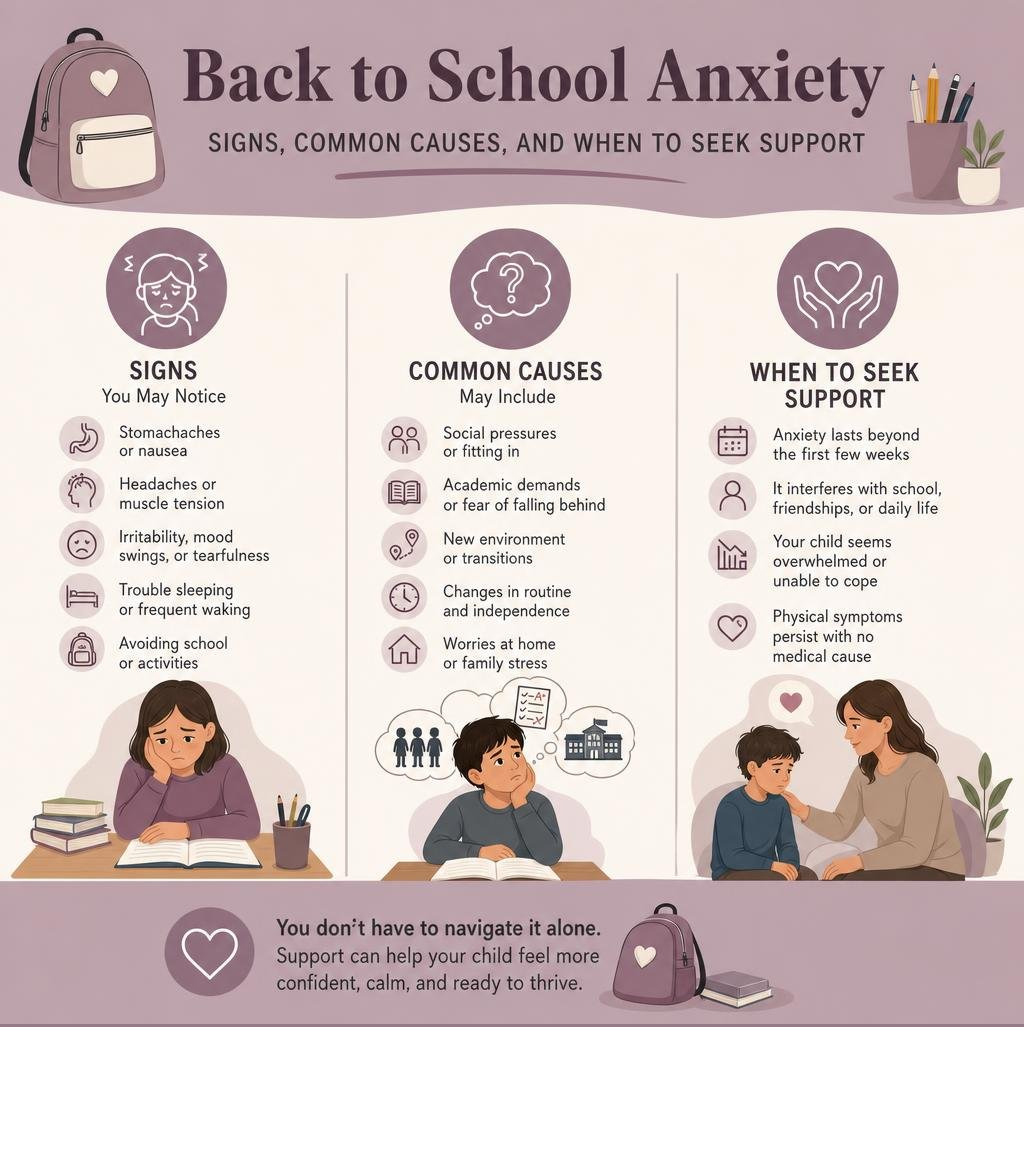
Recognizing the Signs of Back to School Anxiety
When summer winds down, children often communicate their stress in non verbal ways. While adults might say, “I am stressed about my workload,” children and teens frequently express anxiety through physical symptoms or sudden shifts in mood. Understanding these signals helps us intervene before a small worry turns into a daily battle.
Physical symptoms, also known as somatic complaints, are among the most frequent signs of back to school anxiety. A child may wake up on Monday morning complaining of a sharp stomachache, a dull headache, nausea, or muscle tension. These symptoms are real physical sensations. When the brain senses fear, it triggers the body’s natural fight or flight system, flooding the system with stress hormones like cortisol and adrenaline. This response slows digestion and tightens muscles, creating genuine physical pain. If these stomachaches vanish on Saturday morning and reappear on Sunday evening, anxiety is often the underlying driver.
Behavioral changes can also indicate rising distress. You might notice your child becoming unusually reassurance seeking, asking repetitive questions like, “What if I get lost in the hallway?” or “What if nobody sits with me at lunch?” Other children may become tearful, unusually clingy, or prone to sudden emotional outbursts over minor tasks. For deeper insights into how children process stress, you can read our child anxiety parent guide. You can also review additional expert recommendations in this ADAA back-to-school guidance.
Symptoms in Younger Children vs. Teenagers
The way school stress manifests varies across developmental stages. Younger children, such as elementary students, lack the emotional vocabulary to express complex fears about social structure or academic expectations. Consequently, their anxiety tends to show up in outward behaviors and separation difficulty.
Younger children frequently demonstrate:
- High clinginess during drop-off routines or refusal to let go of a parent’s hand.
- Frequent crying spells or temper tantrums, especially in the morning or during bedtime prep.
- Regression in habits, such as thumb-sucking or newfound fear of being alone in a room.
- Repeated physical complaints like stomach pain, nausea, or dizziness right before leaving for school.
Teenagers, on the other hand, encounter unique social pressures, academic stress, and shifts in independence. In middle and high school, students are navigating changing classes, complex peer dynamics, and heavy workloads.
Teenagers experiencing school anxiety often present with:
- Social withdrawal, isolating themselves in their bedrooms and avoiding family interactions.
- Heightened irritability, snappiness, or defensiveness when asked basic questions about their school day.
- Significant disruptions in sleep patterns, such as staying up extremely late due to racing thoughts or sleeping excessively on weekends.
- School avoidance, which may include deliberate tardiness, frequently visiting the nurse’s office, or flatly refusing to leave the house.
Is It Normal Back to School Anxiety or School Refusal?
It is entirely natural for children to feel jittery during the first few weeks of August or September. Normal back to school jitters are transient. As children become accustomed to their new teachers, class schedules, and peer groups, their stress baseline settles down naturally.
School refusal, however, is a more persistent pattern of severe distress that interferes with a child’s ability to attend or stay at school. School refusal is not willful bad behavior or simple defiance; it is a clinical manifestation of extreme anxiety. When a child experiences school refusal, the thought of entering the school building produces severe panic.
Understanding the difference between typical transition stress and school refusal allows families to seek timely support:
| Characteristic | Normal Back to School Jitters | School Refusal |
|---|---|---|
| Duration | Lasts 1 to 3 weeks as routines build | Persists beyond 3 to 4 weeks or worsens over time |
| Morning Routine | Reluctance or complaints, but gets ready and goes | Extreme emotional meltdowns, panic, or flat refusal to move |
| Physical Symptoms | Occasional stomachache that fades after arrival | Daily severe physical complaints that vanish if allowed to stay home |
| School Attendance | Attends school continuously despite mild nerves | Missing multiple days, repeated nurse visits, or leaving early |
| Recovery | Bounces back easily after returning home from school | Continuous distress, dread, or anticipatory panic on weeknights |
Proactive Preparation: How to Help Your Child Transition

Waiting until the night before the first day of school to discuss expectations often creates an overwhelming environment. Preparation works best when it is gradual, structured, and proactive. By slowly introducing elements of the upcoming school schedule during the final weeks of summer, we help children construct updated mental models, making the transition feel manageable. For a broader look at navigating these seasonal highs and lows, check out our back to school rollercoaster guide.
Adjusting Sleep Routines and Screen Time
Fatigue is a major accelerator of childhood anxiety. During summer break, sleep hours shift, and screen time often increases. Expecting a child to jump from a late night summer schedule to an early morning school routine overnight is a recipe for irritability and panic.
We recommend beginning sleep shifts two weeks prior to the first day of school. Shift bedtimes and wake times earlier in small increments, such as 15 minutes every two or three days. This allows the biological circadian rhythm to adjust smoothly without shocking the system.
Alongside sleep adjustments, re-establishing intentional screen time boundaries is critical. Blue light emitted from phones, tablets, and gaming equipment suppresses melatonin production, making it difficult for an anxious mind to settle down. Move screens out of bedrooms at least one hour before sleep. Establish calming nighttime routines, such as reading, listening to soft audiobooks, or engaging in light stretching.
Conducting School Test Runs and Peer Meetups
Uncertainty feeds anxiety. When a child’s brain cannot picture where they are going or what will happen next, it defaults to threat detection. We can counteract this uncertainty by bringing predictability back into the picture through real world exposure.
Conducting physical test runs reduces environmental fear:
- Walk or drive the route to school multiple times so the commute feels automatic.
- Visit the school grounds. Walk the outdoor hallways, find the main entrance, and play on the playground.
- Attend school open houses or orientation events to locate key areas like the classroom, cafeteria, restrooms, and gym.
- Practice the drop-off sequence, walking up to the door together and practicing a quick, cheerful goodbye routine.
Social familiarization is equally important. Research confirms that having familiar friends during school transitions improves a child’s emotional and academic adjustment. Organize simple, low pressure playdates or playground hangouts with classmates before school starts. Reconnecting with familiar peers provides a powerful anchor of comfort on the first day. For additional perspectives on supporting students through academic shifts, read this useful ILTY guide on student anxiety.
Coping Strategies for First-Day Jitters and Beyond

When the big day arrives, having a concrete coping toolkit allows both parents and children to handle unexpected spikes in worry. The goal is not to eliminate nervous feelings entirely, but to show children that they are capable of experiencing discomfort while still moving forward bravely. To learn more about teaching emotional regulation skills at home, explore our guide on emotional regulation tips. You can also review these helpful strategies in the Mayo Clinic Q&A on school anxiety.
Actionable CBT Strategies for Back to School Anxiety
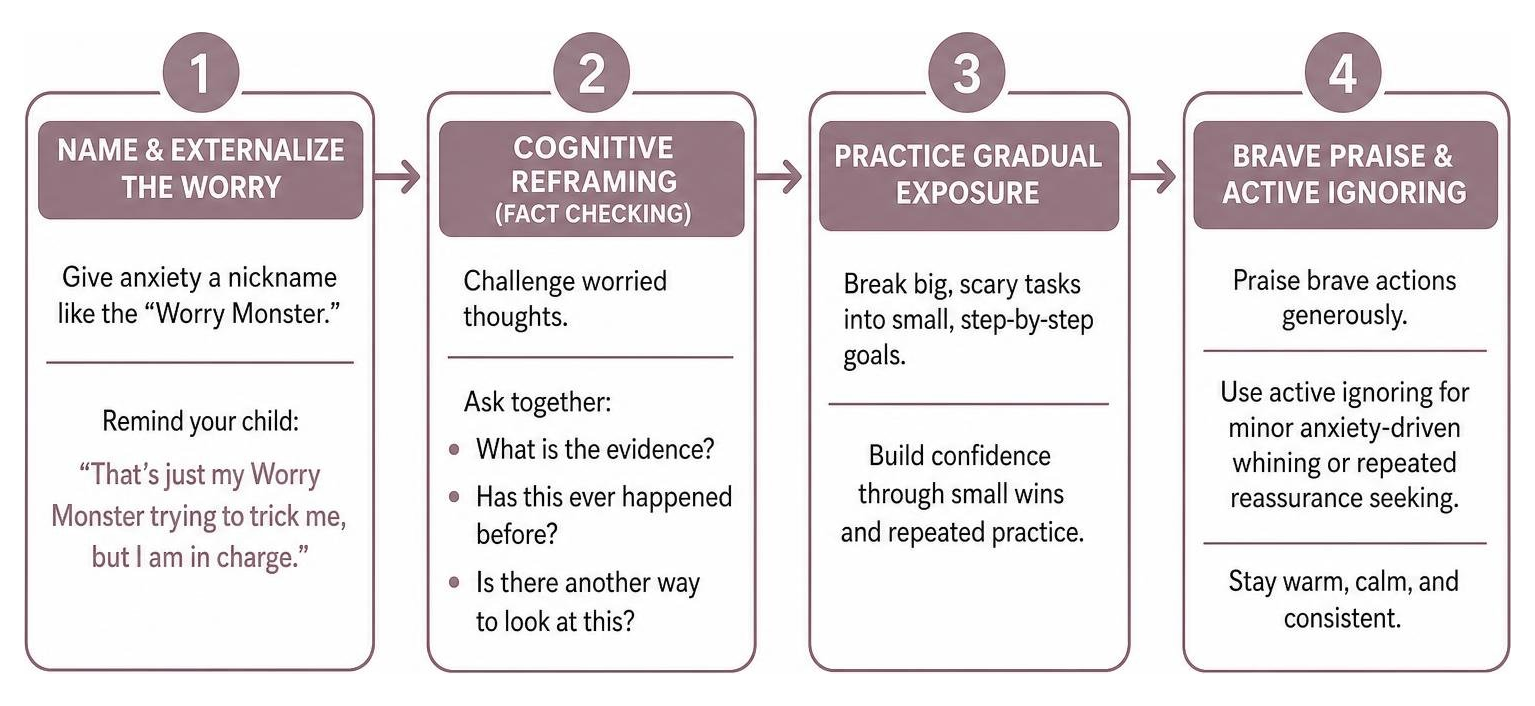
Cognitive Behavioral Therapy (CBT) provides evidence based tools that teach children how thoughts, feelings, and behaviors interact. Parents can easily adapt these tools into daily conversations:
- Name and Externalize the Worry: Help young children separate their identity from their fear. Encourage them to give their anxiety a creative nickname, like the “Worry Monster.” When negative thoughts arise, teach them to say, “That is just my Worry Monster trying to trick me, but I am in charge.”
- Cognitive Reframing (Fact Checking): Anxious minds generate catastrophizing thoughts like, “Nobody will talk to me.” Encourage your child to act like a detective. Ask gentle questions like, “What is the evidence that nobody will talk to you?” or “Has there ever been a time you made a new friend?”
- Practice Gradual Exposure: Avoidance fuels anxiety. When we allow a child to avoid a feared situation, it provides immediate relief, but reinforces the belief that the situation was truly dangerous. Break intimidating tasks into small, step-by-step goals, such as walking to the bus stop on day one, riding the bus on day two, and staying the whole day.
- Brave Praise and Active Ignoring: Give generous praise to brave actions, such as putting on school shoes without complaining or stepping onto the school bus. Conversely, use active ignoring for minor, anxiety driven whining or repetitive reassurance seeking. Answering the exact same question twenty times validates the worry; instead, offer a warm, firm statement like, “We already made a plan for lunch, and I know you can handle it.”
When emotions run exceptionally high, physical grounding techniques help restore calm. Dialectical Behavior Therapy skills offer immediate relief for overwhelmed nervous systems. Discover how to use these physical reset skills in our detailed TIPP skills guide.
Managing Parental Anxiety to Avoid Stress Contagion
Children are remarkably attuned to their parents’ emotional states. If a parent is wringing their hands, asking leading questions like, “Are you terrified about your hard classes?”, or lingering tearfully at drop-off, the child internalizes a clear message: This environment is unsafe.
Managing our own stress as parents is vital:
- Check Your Emotional Temperature: Take a moment to reflect on your own worries regarding safety, academic performance, or growing up. Process these adult worries with partners or friends away from your child.
- Keep Drop-Offs Short and Confident: Prolonged goodbyes increase separation distress. Create a brief goodbye ritual, such as a high-five and a hug, say “I love you and I will see you at 3:00 PM,” and leave confidently.
- Model Calm Self-Talk: Let your child see you manage your own everyday stress calmly. Say things like, “I am feeling a little rushed right now, so I am going to take two deep breaths to slow down.”
To read more about maintaining your own emotional balance while helping others, check out our resource on supporting loved ones.
School Collaboration and Knowing When to Seek Professional Support
Managing back to school anxiety is a team effort. School professionals spend hours each day with your child and can offer valuable support when kept in the loop. For additional insights on navigating school support systems, read this Geisinger back-to-school anxiety guide.
Partnering with Teachers and School Counselors
Proactive communication with your child’s educational team makes a profound difference. You do not need to wait for a crisis to connect with teachers or counselors.
When reaching out to school staff, consider sharing:
- Key triggers that tend to escalate your child’s anxiety, such as public speaking or loud cafeterias.
- Early physical signs that indicate your child is becoming overwhelmed before a full meltdown occurs.
- Coping tools that work effectively at home, such as taking a deep breath or holding a quiet fidget tool.
You can ask the school for small, reasonable accommodations during transition periods. For instance, requesting an “exit pass” that allows an anxious student to step out to the nurse’s or counselor’s office for three minutes to catch their breath can prevent full school refusal. Arranging a structured morning task, like helping the teacher pass out folders, can also give an anxious child a clear purpose upon arrival. If you are unsure how to start this conversation, browse our guide on starting mental health conversations.
Red Flags That Require Clinical Support
While transient jitters are a normal part of life, persistent or severe anxiety requires professional intervention. It takes roughly two to four weeks for a child’s brain to adapt to a new routine. If anxiety symptoms remain high or worsen after the first month of school, it is time to seek an evaluation.
Red flags that indicate a need for professional clinical support include:
- Complete refusal to attend school or frequent panicky departures from the school building.
- Physical symptoms like daily morning vomiting, severe stomachaches, or panic attacks that disrupt the family schedule.
- Marked decline in academic performance, inability to complete assignments, or inability to concentrate.
- Social isolation, loss of interest in previously enjoyed hobbies, or deep withdrawal from friends.
- Expressions of hopelesness, self harm, or statements about wanting to give up.
At Stegall Counseling, PLLC, located in Indian Trail, NC, we work collaboratively with children, teens, and adults to build effective coping tools, process difficult life changes, and overcome persistent worries.
Frequently Asked Questions About School Anxiety
How long does back-to-school adjustment usually take?
For most children, the initial spike in back to school stress settles within two to four weeks. This is the time it typically takes for the brain to build predictable routines and register the new environment as safe. If high levels of distress persist beyond four weeks without improvement, consulting a mental health professional is recommended.
Should I let my child stay home if they have a morning stomachache?
If physical symptoms like stomachaches or headaches are continuous and you have ruled out medical causes with a pediatrician, keeping your child home usually increases anxiety over time. Staying home reinforces avoidance, making it twice as hard to go to school the following day. Provide gentle reassurance, contact the school nurse to let them know, and encourage your child to go to school and do their best.
How do I handle difficult drop-off separations?
Keep drop-offs brief, consistent, and calm. Prolonging the exit, negotiating, or sneaking away unannounced increases panic. Establish a short goodbye ritual, pass your child to a supportive school staff member or friend if necessary, offer praise for brave steps, and leave with confidence.
Finding Long-Term Peace and Support
Navigating back to school anxiety can feel like an emotional workout for the whole family, but anxiety is highly manageable. By implementing structured routines early, practicing gradual exposure, validating feelings without reinforcing avoidance, and keeping open lines of communication with educators, you provide your child with the foundation they need to build true resilience.
Every small step your child takes toward facing a fear builds confidence that lasts a lifetime. The goal is not to live a life completely free of stress, but to learn that we have the tools to handle uncomfortable feelings whenever they arise.
If your child, teen, or family is feeling stuck in a cycle of persistent worry or school stress, you do not have to navigate it alone. We welcome you to learn more about our specialized anxiety therapy services at Stegall Counseling, PLLC, where we offer compassionate, personalized care to help your family find balance, peace, and long term success.