

How to Heal From Domestic Violence and Rebuild Your Life
The Lasting Impacts of Domestic Abuse on Mind and Body
Healing from domestic violence is an intentional process focused on establishing physical and emotional safety, regulating a heightened nervous system, reclaiming personal autonomy, and engaging in trauma-informed therapy. The aftermath of an abusive relationship does not simply vanish once physical safety is attained. Trauma can alter the way the brain and nervous system respond to perceived threats, contributing to hypervigilance, anxiety, sleep problems, and exhaustion. Understanding these reactions helps remove unnecessary self-blame; your body is responding to sustained danger.
When an environment is unpredictable or hostile, the human nervous system can get stuck in a perpetual state of alarm. Chronic stress can repeatedly activate the body’s stress-response systems, which can complicate simple daily activities like sleeping, focusing, or relaxing. Navigating this lingering state of high alert often benefits from specialized anxiety therapy to help quiet chronic physical and emotional reactivity. As highlighted in medical research on trauma pathways and nervous system recovery, trauma responses are not mere emotional reactions, but deeply ingrained biological defense mechanisms.
Physical and Neurological Toll of Ongoing Abuse
Living in an abusive environment keeps the autonomic nervous system locked in continuous fight, flight, or freeze loops. Over extended periods, this chronic activation drains energy stores and strains biological systems:
- Cardiovascular and Digestive Stress: Chronic cortisol elevation can contribute to heart strain, chronic headaches, and persistent gastrointestinal problems.
- Sleep Disruption and Fatigue: Hyperarousal can prevent the brain from entering deep, restorative sleep cycles, resulting in chronic physical fatigue.
- Neurological Deficits and Brain Trauma: Injuries, concussions, or lack of oxygen from physical attacks can result in lasting neurological challenges, memory lapses, and executive dysfunction.
- Musculoskeletal Tension: Persistent somatic bracing can produce chronic pain, muscle tightness, and joint inflammation.
Re-establishing physical equilibrium begins with listening to these somatic cues, prioritizing gentle rest, and allowing the body to safely decompress.
Psychological Conditions: PTSD, Depression, and Betrayal
Emotional manipulation, intimidation, and isolation erode personal agency and psychological stability. In fact, 95% of people who contacted the National Domestic Violence Hotline in 2020 reported experiencing severe emotional abuse. This sustained psychological erosion can contribute to formal clinical conditions:
- Post-Traumatic Stress Disorder (PTSD): Many domestic violence survivors experience PTSD symptoms, including intrusive memories, flashbacks, emotional numbness, and extreme startle reflexes.
- Clinical Depression: Survivors may experience major depressive symptoms, profound hopelessness, and persistent fatigue.
- Betrayal Trauma: When harm is inflicted by a trusted partner, the core ability to evaluate trust is damaged. Navigating this deep rift requires dedicated care, as detailed in our guide on recovering from betrayal trauma.
These psychological responses represent survival adaptations to untenable circumstances. Recognizing them as direct consequences of relational abuse allows survivors to shift away from internal shame toward genuine healing.
Understanding the Long-Term Recovery Timeline
Many popular narratives suggest that leaving an abusive relationship resolves the pain immediately. In truth, recovery unfolds over years of gradual rebuilding and self-discovery. (Carman & Kay-Lambkin, 2022)

The journey of healing follows an individualized trajectory. As shown in scientific research on long-term recovery frameworks, addressing multiple dimensions of life, including housing, emotional stability, health, and social connection, creates a strong foundation for long-term well-being.
The Reality of Healing from Domestic Violence: An Ongoing Process
Long-term studies demonstrate that healing from domestic abuse is an evolving experience rather than an absolute, immediate destination:
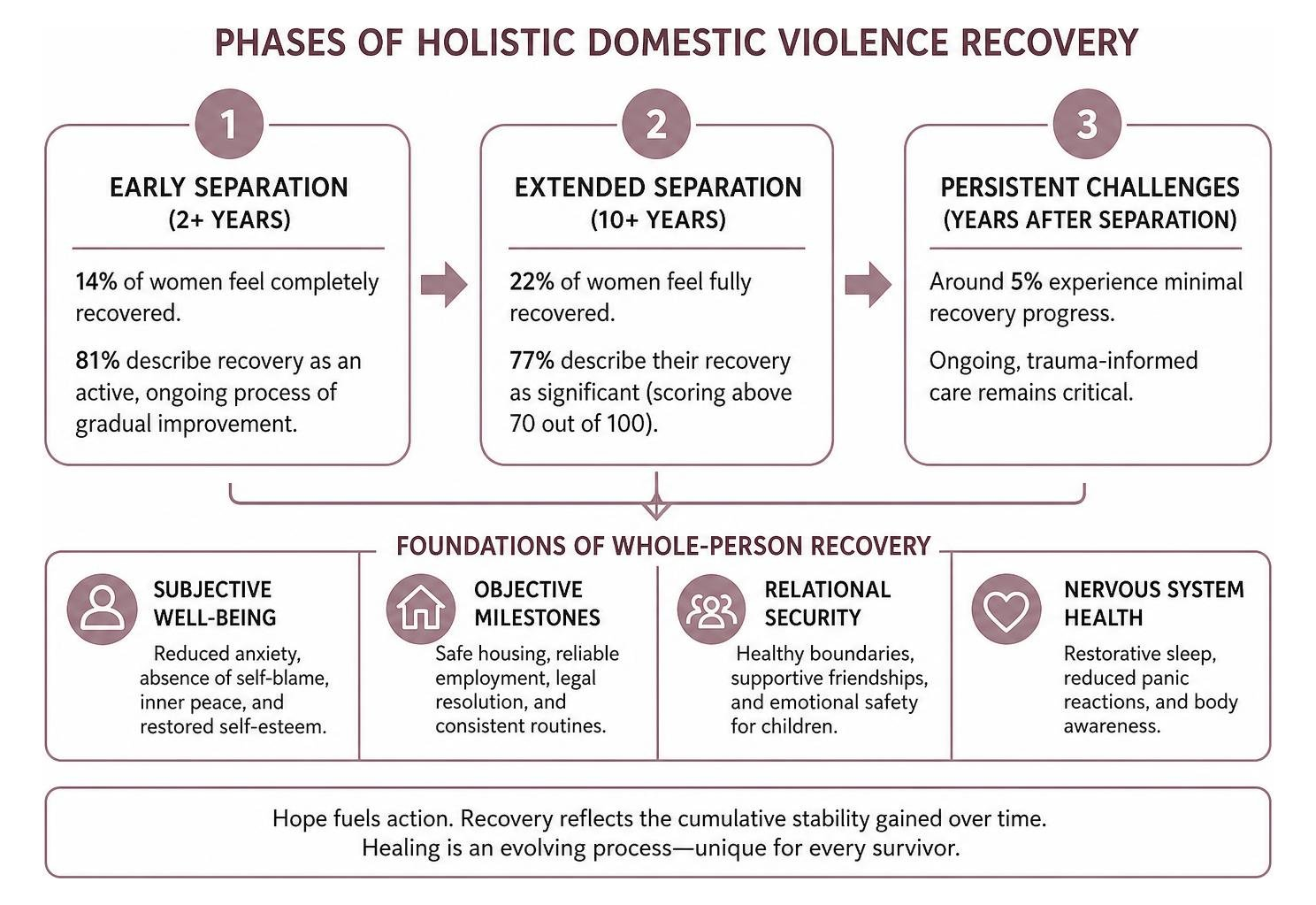
- Early Separation (2+ Years): Approximately 14% of women in long-term recovery rate themselves as completely recovered, while 81% describe recovery as an active, ongoing process of gradual improvement.
- Extended Separation (10+ Years): Among women who separated more than a decade prior, 22% rate themselves as fully recovered, and 77% describe their recovery as significant, scoring above 70 out of 100 on recovery indexes.
- Persistent Challenges: Around 5% of survivors experience minimal recovery progress even years after separation, highlighting the critical need for sustained, trauma-informed professional care.
Hope and perceived recovery operate on distinct paths. Hope acts as an engine that encourages action, while recovery reflects the cumulative stability gained over time.
Subjective Well-Being Versus Objective Recovery Milestones
Evaluating recovery involves balancing both how a person feels internally and what they have stabilized externally.
| Recovery Dimension | Focus Area | Key Milestones & Indicators |
|---|---|---|
| Subjective Well-Being | Internal emotional experience | Reduced anxiety, absence of self-blame, inner peace, and restored self-esteem |
| Objective Milestones | Tangible life stability | Safe and independent housing, reliable employment, legal resolution, and consistent routines |
| Relational Security | Social and family systems | Healthy personal boundaries, supportive friendships, and emotional safety for children |
| Nervous System Health | Somatic equilibrium | Restorative sleep, reduced panic reactions, and body awareness |
Using self-rated visual analog scales alongside tangible milestones allows survivors and clinicians to track progress across emotional, physical, and practical domains.
Evidence-Based Steps for Healing from Domestic Violence
Rebuilding daily life requires practical, intentional actions that restore autonomy and regulate the nervous system.

Establishing Physical Safety and Personal Boundaries
True healing cannot begin without physical and relational safety. Once immediate danger is removed, establishing firm boundaries protects emotional capacity:
- Secure Personal Spaces: Change locks, update account passwords, secure personal documentation, and limit online location sharing.
- Establish Clear Communication Limits: Cease contact when possible, or communicate exclusively through written, structured channels if coparenting duties exist.
- Practice Saying “No” Without Guilt: Protect your personal time and energy by declining invitations or requests that feel overwhelming.
- Release Unearned Responsibility: Consciously practice identifying what falls under your control and letting go of responsibility for the choices and actions of an abusive ex-partner.
Restoring Self-Worth, Identity, and Autonomy
Abusive dynamics systematically dismantle a person’s sense of self. Reclaiming identity is an empowering process of re-learning what brings you joy and purpose:
- Cultivate Nervous System Grounding: Use the 5-4-3-2-1 technique (naming 5 things you see, 4 you feel, 3 you hear, 2 you smell, and 1 you taste) to interrupt panic and return to the present moment.
- Establish Predictable Routines: Consistent wake times, regular nourishing meals, and calming bedtime rituals give your mind and body predictable safety cues.
- Reclaim Small Daily Decisions: Practice making everyday choices independently, such as what music to play, what clothes to wear, or what meals to cook, without seeking external approval.
- Rediscover Personal Interests: Revisit creative hobbies, nature walks, reading, or artistic activities that were set aside during the relationship.
- Practice Daily Self-Affirmation: Counter internalized criticism by deliberately writing down personal strengths, accomplishments, and moments of resilience.
Rebuilding Trust and Protecting Children from Intergenerational Trauma
Abuse impacts entire family systems. Children who witness domestic violence may experience long-term emotional, psychological, and behavioral effects, including traumatic-stress symptoms, anxiety, sleep disruption, difficulty concentrating, and challenges with trust or emotional regulation. These outcomes vary from child to child, and exposure does not mean a child will inevitably repeat an abusive pattern or develop PTSD.
Breaking Generational Cycles and Supporting Impacted Children
Parents can disrupt these intergenerational patterns through intentional, trauma-informed parenting:
- Create Emotional Safety: Validate your child’s feelings, listen without judgment, and reassure them that the abuse was never their fault.
- Maintain Consistent Household Structure: Predictable daily routines for school, homework, and bedtime help children feel grounded and secure.
- Model Non-Violent Conflict Resolution: Demonstrate how to navigate disagreements using calm communication, patience, and clear personal boundaries.
- Seek Specialized Developmental Support: Connect children with play-based or youth-centered counselors to help them process traumatic memories and learn healthy emotional expression.
Cultivating Healthy Relationships and Social Connection
Isolation is a central tactic of abuse. Re-engaging with the world requires discernment and patience:
- Rebuild Trust in Small Steps: Reconnect with trusted friends and family members gradually, allowing safe relationships to prove their consistency over time.
- Recognize Warning Signs Early: Watch for controlling behaviors, love bombing, emotional reactivity, and boundary violations in new acquaintances.
- Learn the Elements of Healthy Trust: Building fulfilling connections involves clear communication and mutual vulnerability, as explored in our guide on how to rebuild trust after betrayal.
- Honor Your Personal Pace: Give yourself full permission to step back from any relationship or interaction that feels unsafe, rushed, or dismissive.
Professional Support Systems and Trauma-Informed Therapies
Self-help practices provide an essential baseline, but long-term resolution often requires structured clinical care. Professional therapy offers a safe space to process traumatic memories, untangle complex emotions, and build sustainable coping strategies.
Healing from Domestic Violence with Professional Clinical Support
Evidence-based counseling addresses trauma holistically across mind and body:
- Specialized Trauma Care: Clinicians utilize specialized modalities to help reprocess traumatic memories without re-traumatizing the nervous system. You can explore how these approaches work in our overview of trauma therapy and read everything you need to know about trauma therapy to understand the process.
- Processing Loss and Disenfranchised Grief: Leaving an abusive partner brings complex grief over lost hopes, disrupted family structures, and altered futures. Our grief and loss counseling supports partners through this adjustment.
- Cognitive and Somatic Reprocessing: Clinical approaches help unseat deeply rooted core beliefs of self-blame, replacing them with self-compassion and realistic perspectives.
Crisis Interventions, Community Advocates, and Support Networks
A comprehensive healing network blends clinical therapy with essential community-based services:
- Crisis Hotlines: The National Domestic Violence Hotline (1-800-799-SAFE) offers free, confidential, 24/7 crisis counseling and safety planning. Survivors can also text START to 88788 for support. If someone is in immediate danger, call 911.
- Legal and Court Advocacy: Community advocates guide survivors through protective orders, custody hearings, and legal separation processes.
- Emergency and Transitional Housing: Organizations offer safe shelter, housing assistance, and basic resources for families leaving dangerous environments.
- Regional Support Programs: Local organizations, including community support services for domestic violence survivors, provide valuable regional support, educational workshops, and emergency assistance.
Frequently Asked Questions About Recovering from Abuse
How long does it typically take to recover from domestic violence?
Recovery timelines vary significantly for each individual. While some survivors experience substantial stabilization within two to three years of leaving an abusive environment, recovery can continue for years and varies considerably from person to person. Progress is non-linear and depends on factors like safety, support systems, access to mental health care, and financial stability.
Why do survivors often miss an abusive partner after leaving?
Missing an abusive partner is a common neurochemical response caused by trauma bonding. The unpredictable cycle of tension, distress, and occasional affection creates a powerful biological attachment similar to physiological addiction. Longing for an ex-partner reflects how the nervous system adapted to that environment; it does not mean leaving was a mistake.
Can a person ever fully heal after experiencing severe domestic abuse?
Yes. Research indicates that the vast majority of survivors achieve substantial, meaningful recovery over time. While traumatic memories remain part of one’s history, they lose their disruptive emotional charge through trauma-informed care. Many survivors go on to experience post-traumatic growth, marked by deep self-worth, healthy relationships, and a renewed sense of purpose.
Conclusion: Moving Forward on Your Healing Journey
Healing from intimate partner violence is a journey of reclaiming your life, your boundaries, and your voice. The physical symptoms, anxiety, and self-doubt you may experience are natural responses to prolonged harm. With time, safe routines, and consistent support, your nervous system can settle, trust can be rebuilt, and a secure future is entirely within reach.
At Stegall Counseling, PLLC, our team provides warm, relatable, trauma-informed care for adults, couples, and families navigating the aftermath of relationship trauma and abuse. If you are ready to take the next step in your recovery journey, we invite you to reach out and schedule personalized trauma therapy with our team.
References
Carman MJ, Kay-Lambkin F. “Long-Term Recovery from Intimate Partner Violence: Recovery and Hope..” International journal of environmental research and public health, 2022. PMCID PMC9654800.